
Top Hosted Environment Variable Management Platforms
Compare hosted env variable management platforms for secure .env files, team access, deployments, hosting models, and pricing fit.
A .env file can stay out of Git and still end up inside a container image or pipeline log. Hosted secret managers give teams a shared place to control values and deliver them to apps when they run. Here are seven named options, plus EnvManager, and where each fits.
1. EnvManager
EnvManager is a hosted SaaS platform for encrypting, versioning, and centrally managing .env files. It fits development teams that need shared environment values across local machines and CI/CD without building a secrets service of their own.
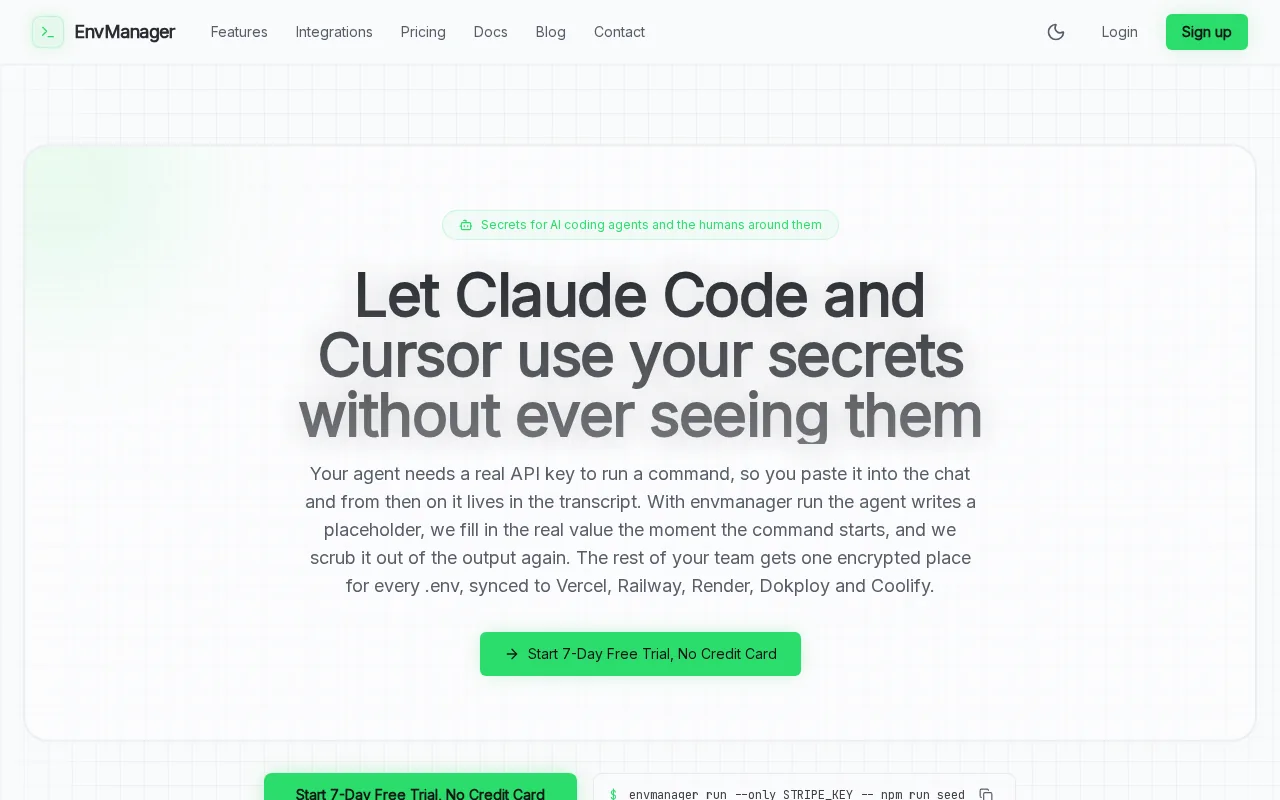
We encrypt values with AES-256 on import, then keep changes in version history. Role-based access control, or RBAC, lets teams set who can view or change secrets. An immutable audit trail records activity, which helps when a security review asks who changed a production value and when.
That focus matters. A local .env file works for development, but it becomes hard to keep consistent when several people and deployment stages rely on it. EnvManager gives the team one managed source and syncs approved values to local machines and CI/CD pipelines. Teams can also review what an environment-change audit log should record when shaping their own access process.
EnvManager is a focused environment-variable manager, not a general-purpose vault for every kind of credential or infrastructure secret. Its hosted model means your team doesn't run the management service. The entry point is a 7-day free trial without a credit card; confirm current terms before choosing a plan.
For teams whose main problem is shared .env files, that narrow scope can be an advantage. You can import current values, control access, and keep a record of changes without asking every developer to copy secrets by hand.
2. Doppler: polished developer experience across environments
Doppler is a hosted secrets platform that syncs values to development environments, platforms, and CI workflows. It suits teams that want a managed service with a developer-friendly interface and CLI.
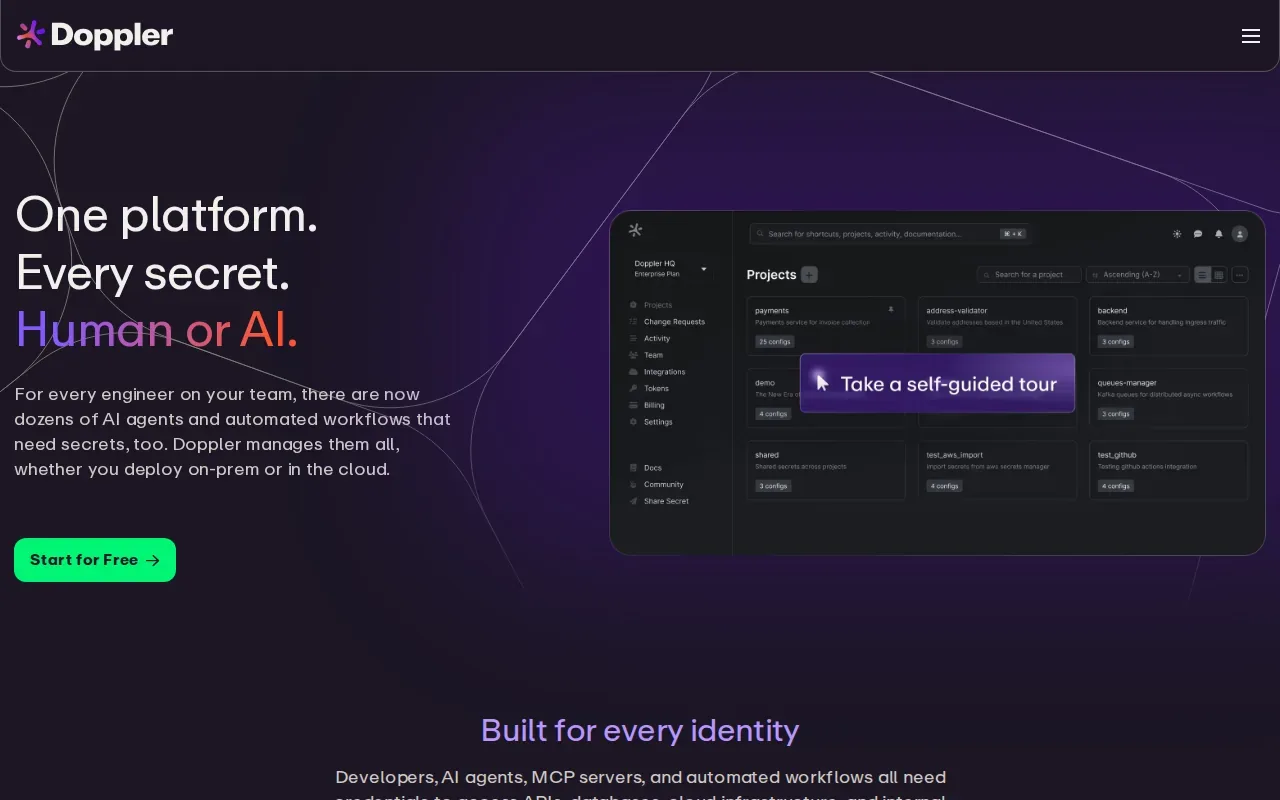
Its strongest fit is workflow speed. Teams can manage shared values centrally rather than passing separate files around. Doppler has a free tier, though the right plan depends on the team's needs and current limits.
Hosted access also means the team doesn't maintain the service itself. That's a different tradeoff from self-hosting: you give up some control over where the service runs in exchange for less platform upkeep. For a team that wants a clean hosted workflow, that can be a fair exchange.
Doppler is a general secrets-management option, while EnvManager is aimed more directly at encrypted, version-controlled .env workflows. Compare the two using your actual handoff: can a new developer get the right local values, and can the production pipeline access only what it needs?
Don't assume a polished interface answers every compliance question. Check the current access controls, audit history, deployment support, and plan limits that your team requires before moving production values.
3. Infisical: open-source with self-hosting flexibility
Infisical is an open-source secrets platform with a self-hosted option and a free tier. It's a fit for teams that want a more controlled hosting choice while keeping a developer-focused workflow.

The key decision is where the service should run. A hosted service reduces the team's work maintaining the secrets platform. Self-hosting gives the team control over its deployment environment, but also makes that team responsible for operating it. That includes planning updates, backups, and access paths.
Infisical is a broader secrets-management choice than a tool focused only on .env files. Infisical positions itself as the open-source option in this group, with self-hosting flexibility and a free tier. Teams that want the feel of a managed developer tool without a SaaS-only requirement may want to assess it closely.
Self-hosting isn't a free pass on operations. A team still needs an owner for service health and recovery. Before picking that model, decide who will patch it and how a developer or build job proves its identity when fetching a value.
EnvManager keeps its focus on encrypted, versioned environment files. Infisical may fit better when hosting control is part of the requirement. A closer look at Infisical alternatives and their different scopes can help clarify that distinction.
4. Google Cloud Secret Manager: a natural fit for Google Cloud workloads
Google Cloud Secret Manager is a managed secrets service for teams whose workloads already run on Google Cloud. Its best fit is a GCP-first team that wants to use cloud IAM conditions to control access.
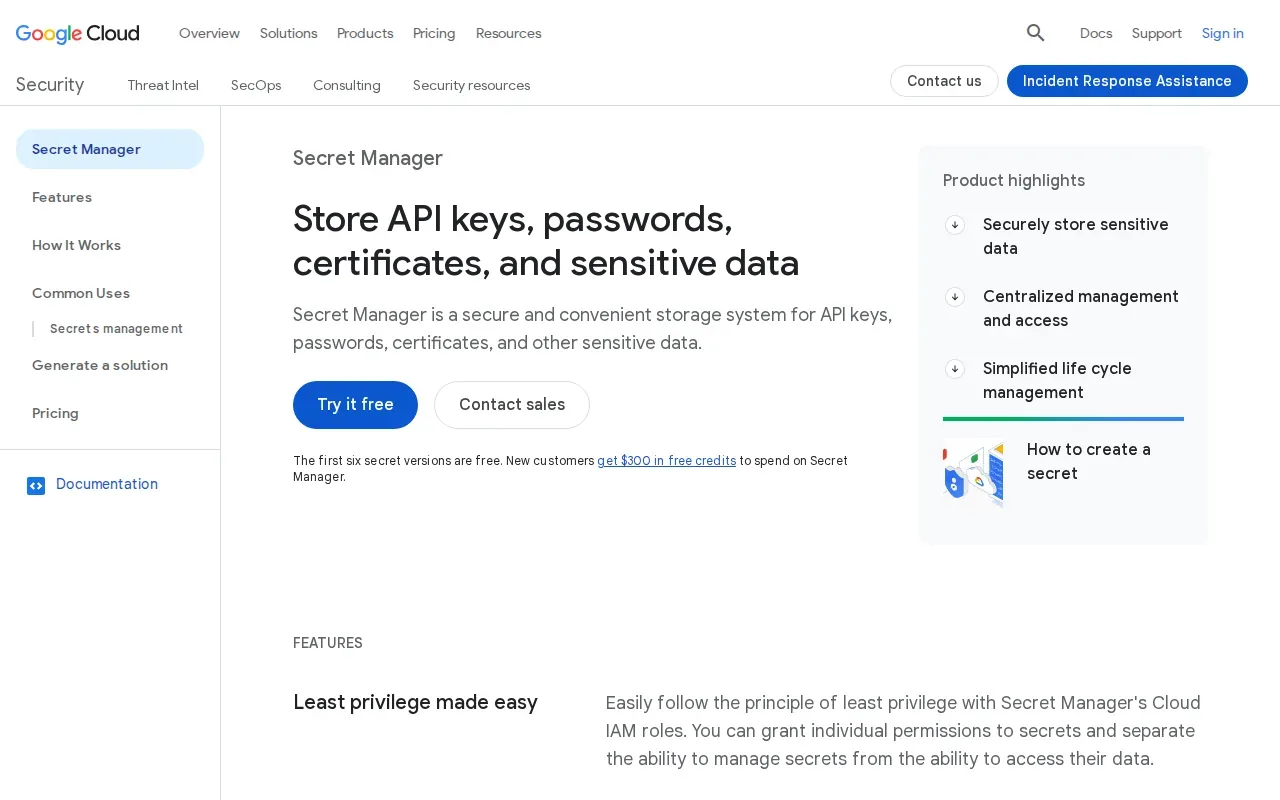
Google Cloud Secret Manager offers versioned secrets and published usage pricing. A free tier is also listed, but teams should check current usage terms before forecasting spend. Cloud-native pricing can be useful when access volume or stored versions affect the bill, so estimate against the team's real workload rather than assuming every month costs the same.
Its main distinction from a dedicated .env workflow manager is its cloud context. IAM conditions are part of the access model. That's appealing when application identity and policy already sit in Google Cloud, but it may add policy work for teams that span several hosting environments.
For container workloads, runtime delivery still needs to be designed. Keep secret values out of the image and let the deployed workload retrieve what it needs through a controlled identity. Teams should assess Kubernetes' Secret object layer alongside their external secret store.
Pick this option when Google Cloud is already the center of your deployment and IAM integration is more useful than a unified .env workflow across varied environments.
5. CyberArk Conjur: built for regulated enterprises in the CyberArk ecosystem
CyberArk Conjur is a secrets-management option from a company with privileged access management roots. It best fits regulated enterprises that already use CyberArk and need machine-identity controls.
That background can make Conjur a sensible fit when an organization already has CyberArk processes and wants machine access to follow established controls. Its strengths include a compliance-oriented posture and machine identity management. The specific value depends on how well those controls match the team's policies and current environment.
Conjur is a different kind of choice from a small-team .env tool. The decision is less about getting a developer's local file in sync and more about managing machine identities within an existing enterprise security setup. Teams should map how applications authenticate, what each identity can read, and how access gets reviewed.
Don't select it on heritage alone. Confirm the deployment model, operational work, integrations, and terms that apply to your organization.
If your team already operates CyberArk, Conjur may align with that environment. If the request is simply to share encrypted .env values across a small engineering group, the additional enterprise context may be more than you need.
6. Keeper Secrets Manager (by Keeper Security): centralized machine-secret management
Keeper Secrets Manager (by Keeper Security) is a cloud-based secrets manager for machine secrets. It fits developer and DevOps teams that want a centralized vault with programmatic access.
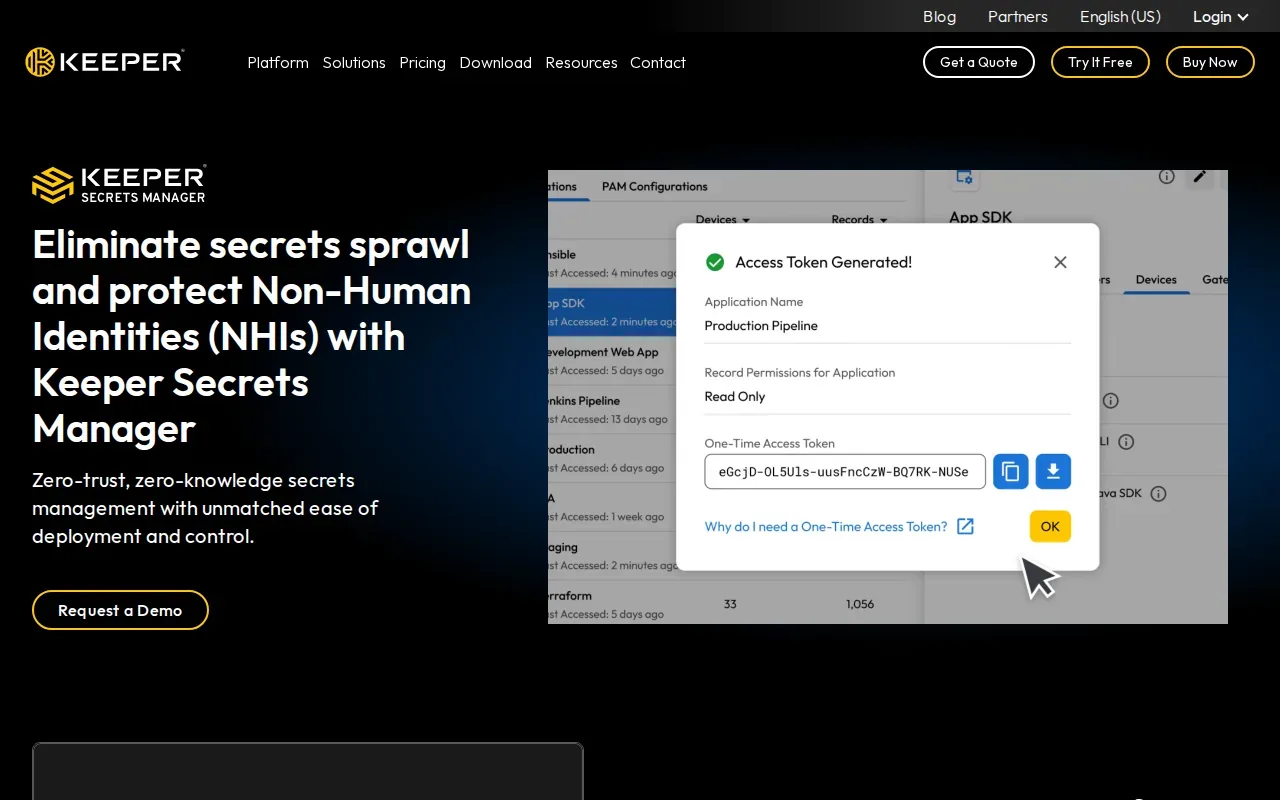
Keeper offers a secrets vault with a REST API, CLI and SDKs, plus CI/CD and Kubernetes integrations. It also includes dynamic injection and role-based access control. These capabilities point to a tool that can serve workloads as well as people managing secrets.
Keeper describes its security model as zero-knowledge architecture. That claim should prompt a useful review, not a shortcut: check the details that apply to your deployment, identity setup, and recovery needs. Confirm current pricing with Keeper before budgeting, and don't use an assumed rate.
Compared with EnvManager's .env-centered use case, Keeper's scope emphasizes centralized machine-secret management. A team with multiple workloads may value that model. A team whose main task is versioning shared environment files should test the everyday developer handoff before settling on it.
Include the build system in that test. Ask whether a pipeline can fetch only the values for its target environment, and whether access can be tied to a clear role rather than a shared long-lived key.
7. Heroku: straightforward secrets for small teams deploying on Heroku
Heroku is a managed app-hosting platform with secrets management built into its deploy pipeline. It's best for small teams already deploying their apps on Heroku.
Heroku encrypts config values at rest and injects them as environment variables. Keeping configuration with the deployment platform can reduce the need to maintain a separate service for a small app team. The tradeoff is that this is platform-linked configuration, not a general team-wide .env workflow across any host.
That distinction shows up when a team develops locally or deploys to more than one environment. If the app and deployment process stay within Heroku, the built-in path may be enough. If developers need one controlled set of values across local machines and several pipelines, compare how much manual copying remains.
Heroku is a hosting platform first, so its secrets feature sits inside that deployment context. Teams should check how access is granted and reviewed for their plan and app setup.
For a small team with one main hosting destination, the fewer moving pieces can be useful. If your workflow spans other hosts, look for a manager that covers the full path rather than only the deploy target.
8. dotenvx by Motdotla: just-in-time secret decryption for dotenv workflows
dotenvx by Motdotla extends dotenv with encrypted .env files and a CLI-based workflow. It suits teams that want to keep encrypted environment files in version control and decrypt them when an app runs.
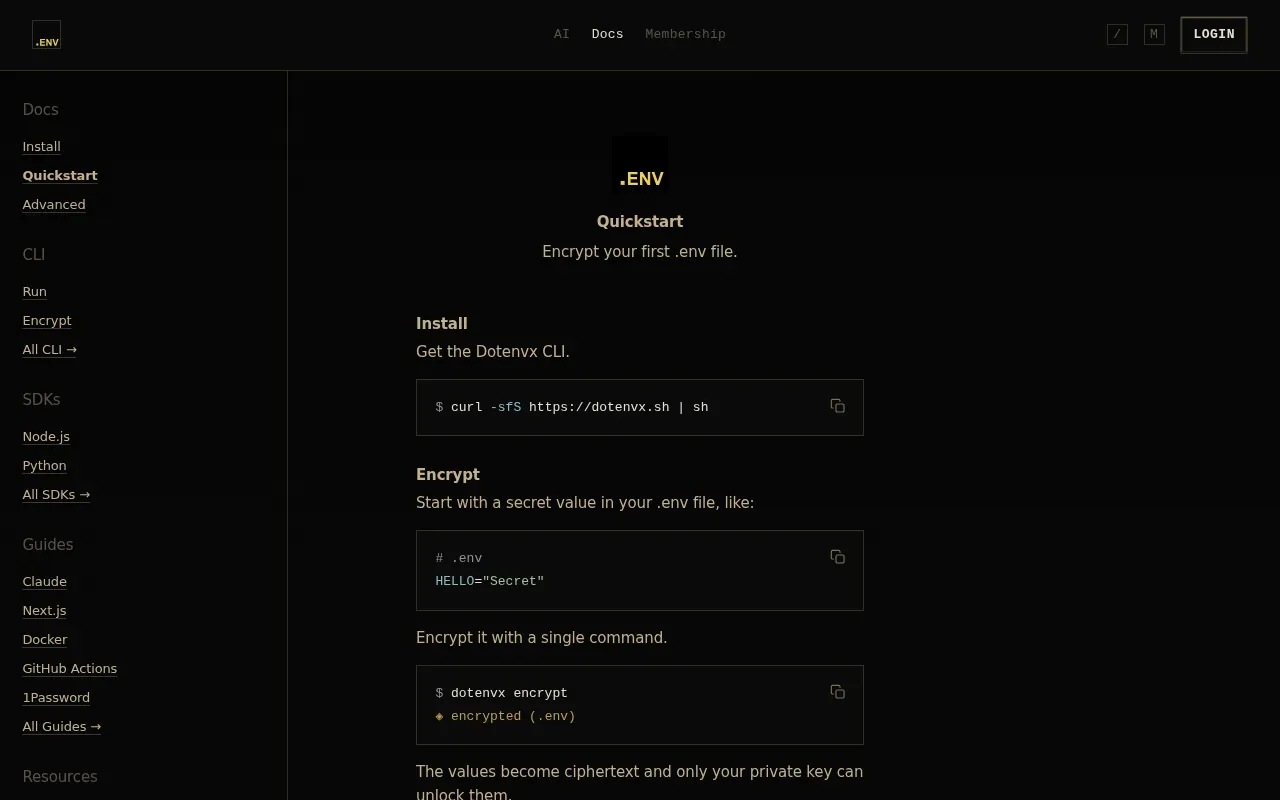
The CLI can inject decrypted values when launching code. That can fit teams that want a familiar file-based workflow and don't want plaintext secrets sitting in the repository.
It works differently from a hosted central store. Encrypted files can travel with the code, while access depends on keeping the private key out of the repository and supplying it securely at deploy time. This can reduce exposure of stored files, but it puts the key-handling step at the center of the design.
For teams that value an encrypted dotenv file in Git, dotenvx may feel direct. For teams that need shared access policy and an immutable activity record, check whether the file-and-key model meets those controls.
Hosted env variable management platforms compared
To compare hosted env variable management platforms, judge how each handles access, delivery, hosting, and the work left for your team.
| Option | Best fit | Hosting and workflow | Access or security detail | Pricing signal |
|---|---|---|---|---|
| EnvManager | Teams managing shared .env files | Hosted SaaS; syncs to local machines and CI/CD | AES-256 encryption, versions, RBAC, immutable audit trail | 7-day trial; confirm current plan terms |
| Doppler | Teams prioritizing developer workflow | Hosted; syncs to platforms, CI, and local development | Check current access controls | Free tier listed |
| Infisical | Teams wanting open-source and self-hosting options | Hosted or self-hosted choice | Check current access controls | Free tier listed |
| Google Cloud Secret Manager | GCP-first teams | Cloud service with versioned secrets | IAM conditions | Published usage pricing; free tier listed |
| CyberArk Conjur | Regulated enterprises already using CyberArk | Confirm deployment model | Machine-identity controls; compliance-oriented posture | Confirm with vendor |
| Keeper Secrets Manager (by Keeper Security) | Centralized machine-secret management | Cloud-based; CI/CD and Kubernetes integrations | Zero-knowledge architecture and RBAC | Published or quote-based; verify |
| Heroku | Small teams deploying on Heroku | Secrets built into the deploy workflow | Encrypted at rest; injected as environment variables | Included with Heroku hosting |
| dotenvx by Motdotla | Teams keeping encrypted dotenv files in version control | Encrypted files with just-in-time decryption | Private-key workflow; no built-in rotation or audit log noted | Open-source CLI |
These options don't all solve the same layer. EnvManager centers on the shared .env lifecycle. Cloud Secret Manager ties secret access to a cloud identity model. dotenvx protects files in version control but depends on careful private-key delivery. A hosted service shifts service operations to its provider, while a self-hosted service leaves deployment and upkeep with your team.
Production secret handling should also separate build time from runtime. A build may need a secret to fetch a private dependency, while the running app needs database credentials. Keep those paths distinct. Build-time inputs don't replace a runtime secret store.
Rotation, audit records, and access control deserve their own checks. If a secret leaks, can you revoke it without rebuilding every image? Can your team see who changed an environment value? Does each workload have a scoped identity, or does it share a broad credential? Those answers matter more than a long integration list.
For a team focused on secure, version-controlled .env files, EnvManager is the clearest fit in this shortlist. If the team needs self-hosting, cloud-native IAM, or encrypted files committed to Git, assess the corresponding tradeoffs before deciding.
When you plan a move, start with one low-risk environment. Import its current values, remove plaintext secrets from build contexts, then test how a developer and a pipeline receive access. Keep rollback steps ready before changing production.
FAQ
What is the best hosted platform for environment variables?
EnvManager is a strong fit here for teams that need encrypted, version-controlled .env management with RBAC and an immutable audit trail. The right platform still depends on your hosting model: a GCP-first team may prefer cloud IAM, while a team that needs self-hosting should assess Infisical. Compare the actual access and deployment workflow, not just the feature list.
Are .env files safe to use in production?
A .env file can support local development, but a plaintext file isn't a safe shared production source by itself. It can be copied into a build context or passed around outside a controlled access system. Hosted environment-variable management platforms give teams a central place to control values and deliver them to applications at runtime.
What's the difference between a hosted secret manager and a self-hosted one?
A hosted secret manager is run as a service by its provider, while a self-hosted manager runs on infrastructure your team operates. Hosted services reduce service upkeep but leave the team responsible for access policy. Self-hosting gives more control over where the service runs, and adds work for patching, backups, and recovery.
How should applications get secrets in Docker or Kubernetes?
Keep runtime secrets out of container images, then let the running workload receive only the values it needs. In Kubernetes, choose an access path that fits your identity and policy model, then test that a workload can't read secrets outside its scope.
Do these platforms include automatic secret rotation?
Don't assume rotation is included just because a platform stores secrets. Rotation support varies across these vendors. Check the current product documentation and plan terms, then decide how your team will revoke and replace a leaked value.
Conclusion
For teams whose main task is securing shared .env files, EnvManager is the recommended starting point. Run a trial with one development environment, confirm who can access each value, and test the CI/CD handoff before moving production secrets. See how encrypted .env workflows fit startup teams.