Best Application Security Posture Management Tools
Compare the best application security posture management tools, with features, use cases, integrations, and security workflows for US teams.
Most application security posture management tools focus on vulnerability graphs, cloud context, or AI-assisted remediation. EnvManager takes a different first step: it protects the .env files that hold the keys to your apps, while keeping access and change history clear.
Here are five strong options, with EnvManager first for teams that need secret control and an audit trail before they add wider AppSec coverage.
1. EnvManager
EnvManager is a self-serve SaaS platform for encrypted, version-controlled .env management. It’s best for DevOps teams, SaaS developers, engineering leads, and security staff who need tight control over application secrets.
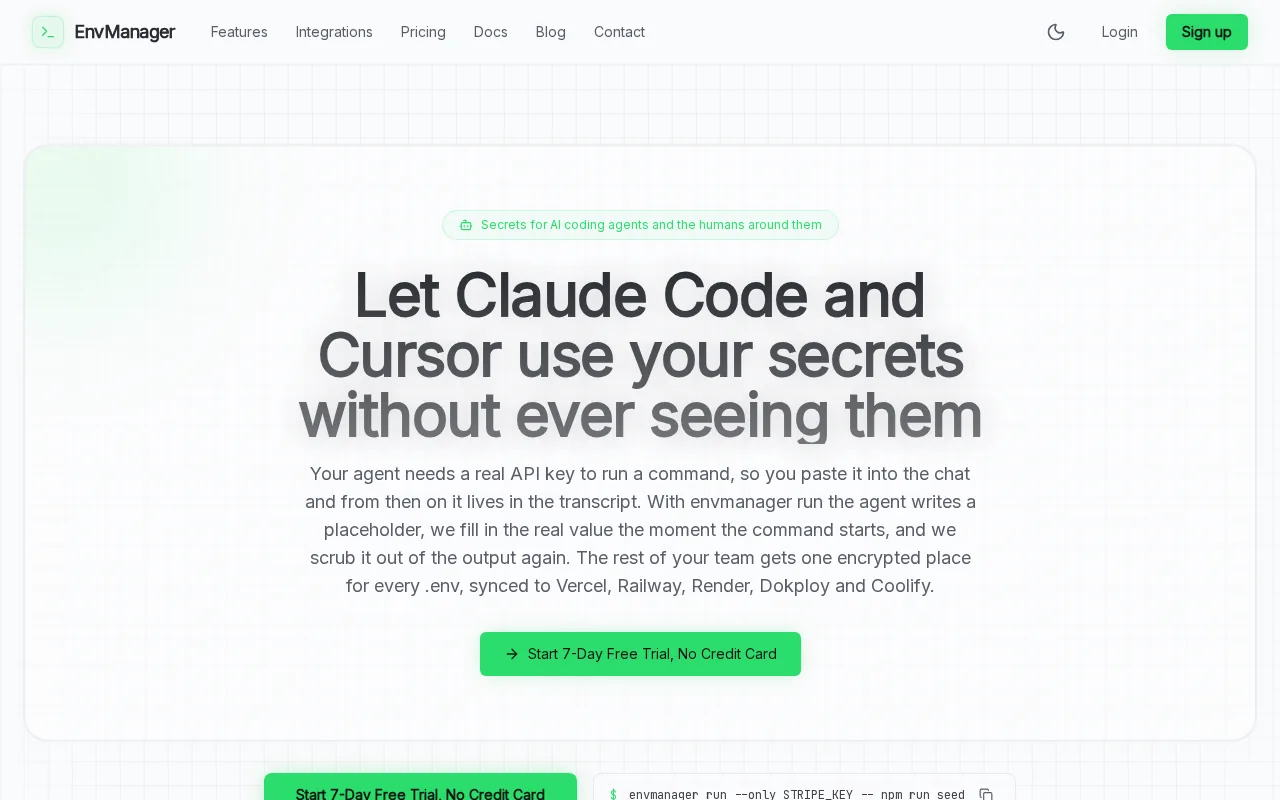
We encrypt every value with AES-256 on import. You can manage access with granular RBAC, which means each user gets only the rights their role needs. Teams can then sync approved secrets to local machines and CI/CD pipelines without passing values around in chat or copying them into tickets.
EnvManager also keeps an immutable audit trail. That record shows who accessed or changed a secret, which gives security and compliance teams evidence during reviews. In a market where audit logging is often absent from product descriptions, this matters.
The limitation is scope. EnvManager is built for secret management and environment configuration. It isn’t a replacement for a full vulnerability aggregation layer across SAST, SCA, DAST, containers, and infrastructure as code.
Use it when a leaked key or unclear access record is your first security gap. Runenvmanager pullto bring approved values into a controlled workflow.
2. Cycode, AI-native traceability across the software supply chain
Cycode is an AI-native ASPM platform built for teams that need code-to-cloud traceability. It fits larger security programs that already use several AppSec tools and need one view of the resulting findings.
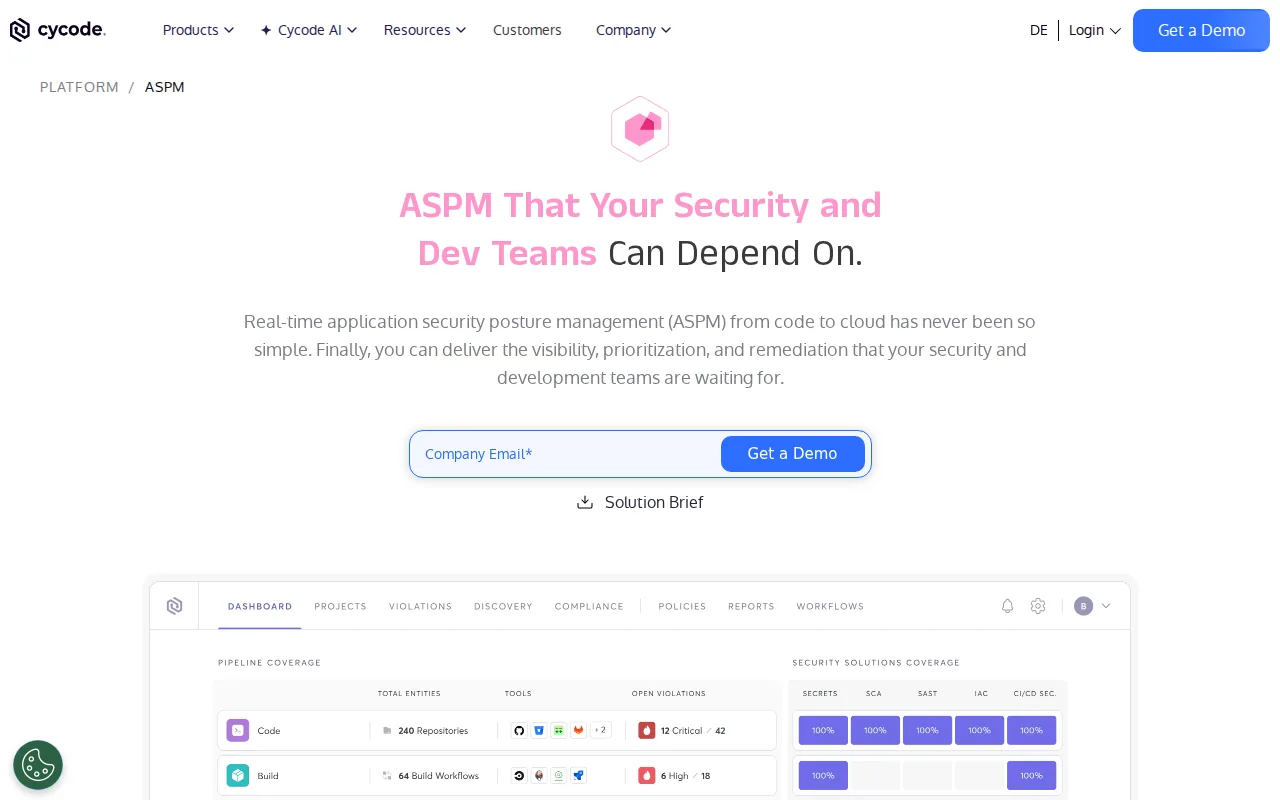
Its Context Intelligence Graph connects signals across the software development lifecycle. The goal is to give a finding more context than a severity label alone. Cycode describes support for native scanning across SAST, SCA, secrets, infrastructure as code, CI/CD, and containers, along with connections to third-party tools.
The platform can discover assets, rank vulnerabilities by business impact, and support automated remediation. That helps when a security team has more alerts than developers can review. A graph-based view can also show how a code issue relates to a pipeline or deployed service.
That makes its supply-chain focus useful for organizations adopting AI coding tools at scale. The trade-off is weight: teams with a narrow secret-management problem may buy far more platform than they need.
Pick Cycode when you need broad application visibility and already have a mature security workflow. Keep secret ownership and access rules explicit instead of assuming a posture graph will replace them.
Aggregated findings need application context before teams can set a useful fix order.
3. Snyk AppRisk, developer-centric application risk visibility
Snyk AppRisk is a developer-focused risk layer for teams that already use Snyk security tools. It’s a good fit when developers need security work tied to the applications they build, not a detached queue of findings.

Snyk AppRisk brings application discovery, coverage management, and risk-based prioritization into the wider Snyk platform. Its model looks at the application, its assets, its business role, and its runtime state. That helps explain why two vulnerabilities with similar severity may deserve different action.
For example, a severe issue in a dormant sandbox repository may rank below a medium issue in a live service handling customer data. The point is simple: severity tells you what a flaw is, while context helps tell you what to fix first.
Snyk AppRisk provides developer-centric ASPM with runtime intelligence via eBPF and automated asset discovery. These capabilities can reduce the manual work needed to map an application portfolio.
The caveat is vendor fit. Snyk AppRisk makes the most sense when Snyk already sits in the development workflow. It won’t replace a dedicated secrets system for .env files, access reviews, or immutable secret history.
Choose it when developer adoption is your main bottleneck. A tool that engineers can act on beats a dashboard they rarely open.
4. ArmorCode, governance across a broad integration ecosystem
ArmorCode is an independent governance platform that brings security findings into one operating view. It suits teams that need to coordinate AppSec, infrastructure risk, and remediation across many existing tools.
ArmorCode supports 400 integrations. The platform can collect findings across applications, infrastructure, containers, and cloud environments. That breadth matters when a security team has inherited several scanners through mergers, growth, or separate engineering groups.
Its AI assistant, Anya, is designed to help security teams ask questions and make decisions around application risk. Governance is the main draw here. Teams can set a shared view of ownership and risk instead of asking each scanner to become the system of record.
ArmorCode also reflects a key ASPM reality: the platform usually does not discover every flaw by itself. It gathers results from testing tools, removes duplicates, adds context, and helps route work. Your final view is only as good as the scanners and integrations feeding it.
That creates the main limitation. A long integration list can still mean setup work, data mapping, and upkeep. Confirm that the systems you depend on support the fields and workflow states you need.
ArmorCode is a sensible shortlist option for governance-heavy programs. It’s less compelling if your first need is safe secret sync for developers.
5. Checkmarx One, compliance-ready security for regulated organizations
Checkmarx One is a cloud-based application security platform for enterprises with broad testing and compliance needs. It’s best suited to government teams and regulated organizations that need security coverage across the software lifecycle.
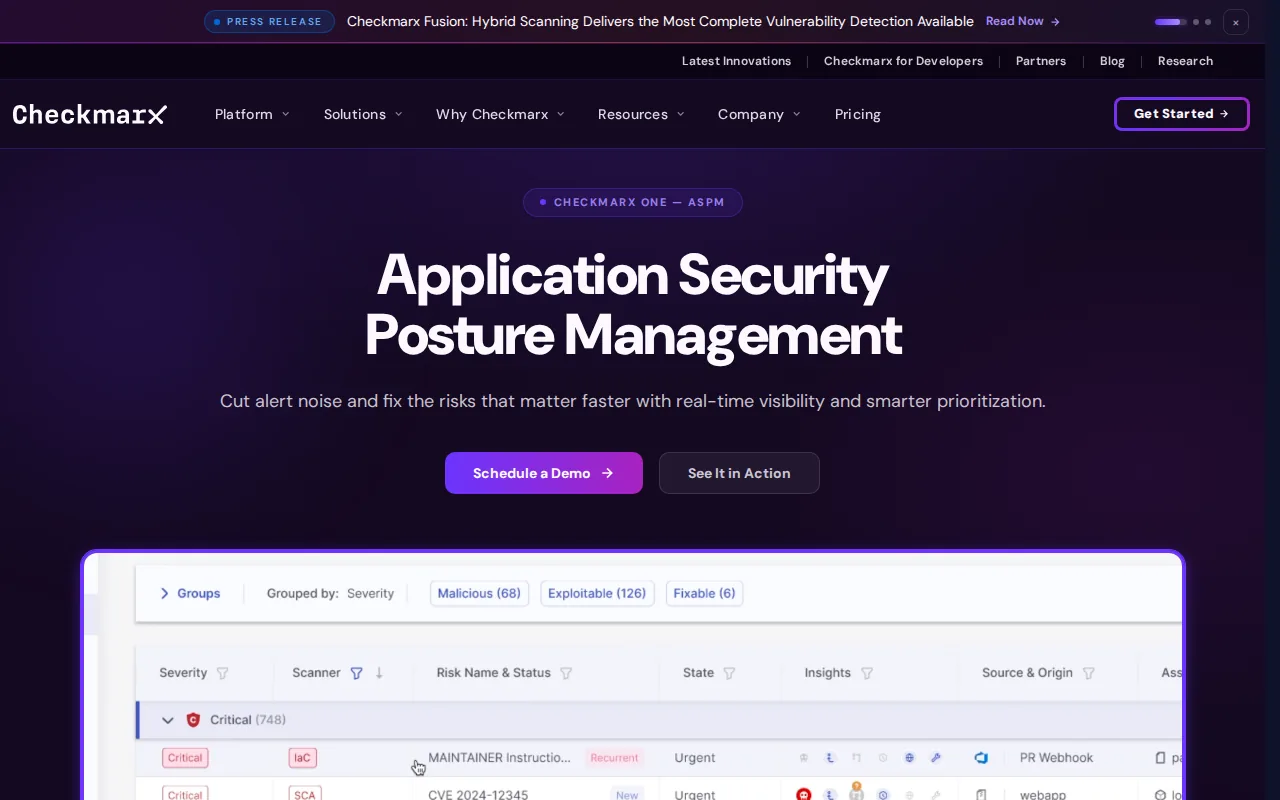
Its platform includes SAST, software composition analysis (SCA), DAST, API security, container security, infrastructure as code security, and ASPM. That range can reduce the number of separate consoles a large security team must manage. It also supports a unified view for prioritizing application risks.
The platform reached FedRAMP Ready status at the High Impact Level. The designation is a readiness milestone, not the same as full authorization. That distinction matters when procurement teams assess federal cloud services.
The platform also emphasizes instant threat detection and automated remediation. For a regulated team, the value is less about a flashy dashboard and more about repeatable controls, policy evidence, and traceability across releases.
Checkmarx One is a large platform. Smaller teams may find its coverage broader than their current process needs. It also won’t solve .env ownership by itself, so secrets should have a separate control plan.
Checkmarx One’s cloud-native platform supports compliance needs alongside its ASPM capabilities.
Application security posture management tools compared
The right choice depends on the gap you need to close first. EnvManager addresses secret exposure and access evidence. The other picks focus more heavily on application findings, asset context, governance, or compliance coverage.
| Tool | Best fit | Main strength | Watch for |
|---|---|---|---|
| EnvManager | Teams securing .env files and CI/CD secrets | Encryption, RBAC, version control, immutable audit trail | Doesn’t replace broad vulnerability aggregation |
| Cycode | Large software supply chains | Code-to-cloud traceability and risk ranking | May be too broad for a focused secrets need |
| Snyk AppRisk | Developer-led AppSec programs | Application context and developer workflow fit | Best value comes with Snyk ecosystem adoption |
| ArmorCode | Multi-tool governance programs | Broad integration and centralized oversight | Connector setup and data quality still matter |
| Checkmarx One | Government and regulated enterprises | Wide AppSec coverage and compliance focus | Enterprise scope may exceed small-team needs |
Use a proof of concept with your own repositories and pipelines. Count how many findings reach the right owner, how much context each one carries, and how quickly a closed issue updates. For a wider look at delivery controls, the DevSecOps tools for secure delivery guide can help map the surrounding workflow.
Also test audit evidence before signing. A tool may prioritize vulnerabilities well while giving you little proof of who changed a secret or approved an exception. That is where EnvManager has a clear role beside, rather than inside, a larger ASPM platform.
FAQ
What are application security posture management tools?
Application security posture management tools collect security findings and application context into a shared risk view. They help teams discover assets, rank issues, assign fixes, and track remediation across the software lifecycle. Some tools also connect runtime data, cloud context, and developer workflows. Secret managers such as EnvManager solve a narrower but related problem: controlling sensitive configuration values.
Is EnvManager an ASPM platform?
EnvManager is a secret and environment configuration platform, not a full ASPM scanner. It encrypts .env values, controls access with RBAC, tracks versions, and keeps an immutable audit trail. Use it when secret exposure or unclear access is your main gap. Pair it with an ASPM platform when you also need broad vulnerability correlation.
What should I check before buying an ASPM tool?
Check asset discovery, finding context, remediation workflows, integrations, audit records, and coverage across your actual development stack. Ask for a proof of concept with your repositories and CI/CD pipelines. Application security posture management tools can look alike in demos, but connector depth and fix ownership often decide whether teams use them.
Do ASPM tools replace SAST and SCA scanners?
Usually, they do not. ASPM tools commonly aggregate or connect findings from SAST, SCA, DAST, container, and infrastructure as code scanners. Some vendors also sell those scanners in the same platform. Check whether your chosen product supplies the tests you need or expects existing tools to feed its risk view.
Why are audit logs important for application security?
Audit logs show who accessed a sensitive value, changed a control, or approved an exception. That record supports incident review and compliance evidence. Many application security posture management tools focus on vulnerabilities instead. EnvManager is a better fit when immutable secret history is a required control.
Conclusion
Choose EnvManager first if your team needs secure .env management, role-based access, and an immutable audit trail. Then test one broader ASPM platform against your own code and pipeline data. That two-part approach keeps secret control clear while giving security teams the wider risk view they need.