Best Software Composition Analysis Tools
Compare the best software composition analysis tools for vulnerability detection, SBOMs, license compliance, and secure CI/CD workflows.
Open-source code brings speed, but every dependency adds risk. Most software composition analysis tools focus on vulnerability detection, while fewer explain their automation, integrations, or limits clearly.
Here are five named options worth shortlisting, plus a direct comparison for teams that need safer dependencies and cleaner CI/CD workflows.
1. EnvManager, secure environment secrets alongside SCA
EnvManager is a self-serve SaaS platform for encrypted, version-controlled .env files. It fits teams that want to pair software composition analysis with safer handling of the secrets used by builds and deployments.
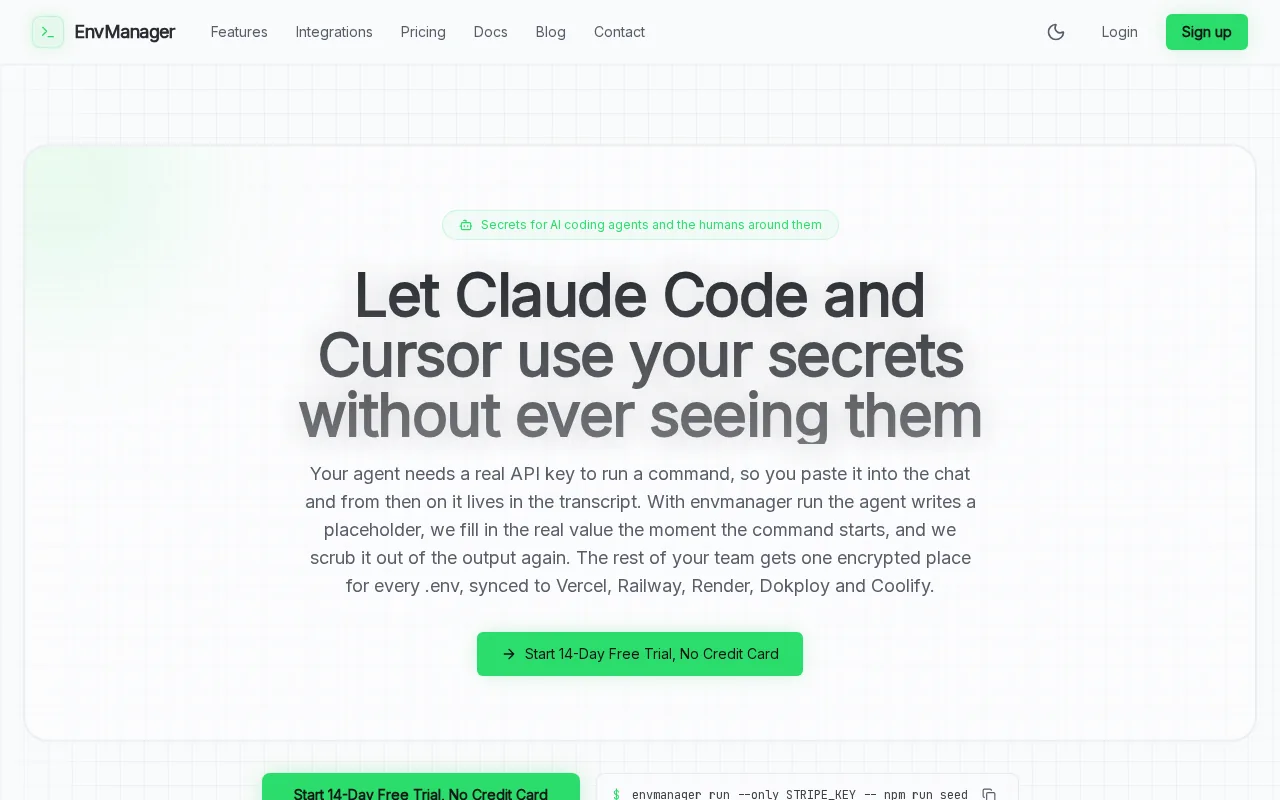
We encrypt every value with AES-256 on import. Role-based access control, or RBAC, limits who can view or change each environment. Version history gives teams a clear record of configuration changes.
The useful part is the handoff between developers, DevOps, and CI/CD. You can sync approved secrets to local machines and pipelines instead of sending values through chat or copying them into build jobs. JIT access can give a person temporary access when a task needs it, while an immutable audit trail helps show who changed what.
SCA finds vulnerable packages. It does not protect an API key that sits in a local file or pipeline variable. That is why secrets management belongs beside dependency checks in a secure delivery plan. Teams reviewing the wider stack can also compare these controls with other DevSecOps tools for secure delivery.
EnvManager is not an SCA scanner, so it won't identify CVEs or license conflicts in third-party packages. Its role is narrower and useful: keep the configuration layer from becoming the next supply-chain weakness.
Best fit: teams that need dependency security and disciplined secret handling in the same delivery process. Runenvmanager pullwhen you need approved environment values on a local machine.
2. Snyk, developer-friendly vulnerability detection
Snyk is a software composition analysis tool built around vulnerability detection. It suits development teams that want findings close to the pull request instead of a separate security queue.
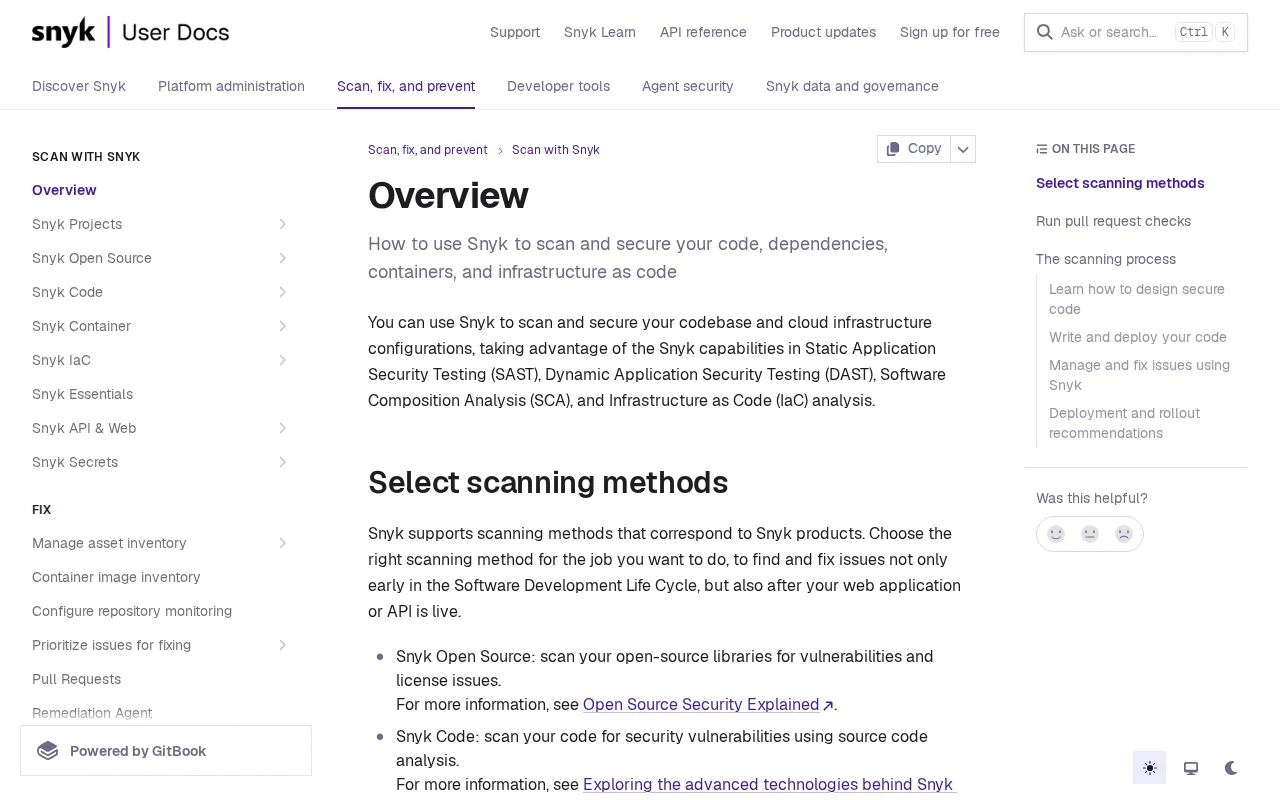
It also lists GitHub integration, which matters when developers already review code there.
That workflow can reduce the gap between finding a vulnerable package and fixing it. A developer can see which dependency needs attention while the change is still under review. The result is easier to act on than a report that arrives after a release.
Still, check your full stack before you commit. Language support and CI/CD hooks vary across products, yet many vendors disclose little detail. Only 5 of the 23 tools covered here listed supported languages or frameworks, while 9 of 23 listed CI/CD integrations. That transparency gap can turn a promising trial into an integration project.
Teams should also ask how Snyk handles transitive dependencies, policy gates, and license checks in their exact setup. A direct dependency is easy to spot. A vulnerable package several levels down can be much harder to trace without a full dependency graph.
For teams that value developer feedback, Snyk is a sensible first trial. Test it against a busy repository, not a clean demo project.
3. Semgrep Supply Chain, vulnerability and license analysis
Semgrep Supply Chain covers both vulnerability detection and license compliance. It fits teams that want dependency checks to answer a security question and a legal question in the same workflow.

SBOM generation and license compliance checking are key automation features. An SBOM gives security and compliance teams an inventory of components inside an application. That inventory helps them respond when a new issue affects a specific package or version.
License checks matter when a team ships software to customers or redistributes a product. A package may be safe from a known CVE but still conflict with company policy. SCA works best when those two review paths meet before the build moves ahead.
Semgrep Supply Chain is a good match for teams that don't want vulnerability alerts to stand alone. You can use the SBOM as a shared record, then set a clear path for license review. That makes a security finding easier to discuss with engineering, legal, and release owners.
Ask for a live test of the package managers and repositories you use. A tool can have the right feature names and still need extra work in your pipeline.
Choose this option when license risk belongs in the same ticket flow as dependency risk. If you only need basic CVE alerts, its wider scope may be more than you need.
4. Black Duck, broad enterprise license and vulnerability coverage
Black Duck focuses on license compliance and vulnerability detection across open-source and third-party code. It is aimed at teams that need broad coverage, formal policy control, and SBOM support.
Black Duck supports vulnerability discovery, license conflict detection, SBOM generation, and policy enforcement. It also describes SPDX and CycloneDX export, which helps teams share component data in recognized formats.
The product's scanning approach goes beyond declared package manifests. Its official material describes file-system scanning, snippet scanning, build monitoring, and binary analysis. That matters when code is modified, embedded in a container, or missing from a normal package declaration.
Black Duck also lists integrations across development tools, package managers, CI/CD systems, issue trackers, and production workflows. Verify each connection during a proof of value, because an integration name does not tell you how much setup or maintenance it needs.
The tradeoff is scope. Smaller teams may find its governance model heavier than they need. Large organizations with audit demands, many repositories, or mixed artifact types have a stronger reason to consider it.
5. Mend.io, automated open-source risk management
Mend.io is an enterprise software composition analysis tool for vulnerability detection and license compliance. It fits teams that need centralized oversight across many services and development groups.
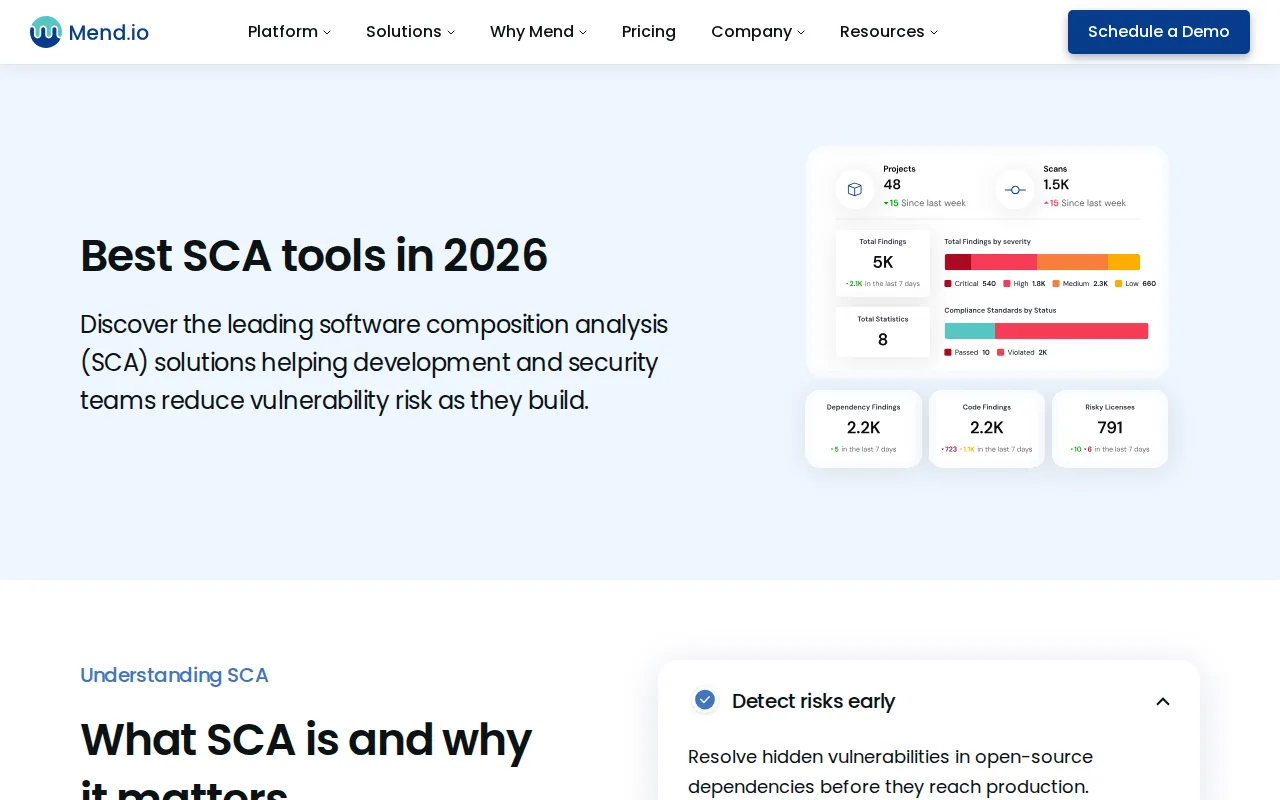
Mend.io also focuses on automated open-source risk management. In a large estate, that can help security teams track the same policy across many repositories instead of asking each team to build its own process.
SBOM support is another reason to consider it. A current inventory can show which services use a risky component. When a new vulnerability appears, teams can focus on affected applications rather than search every repository by hand.
There is a clear caveat. That matters when teams have exceptions, legacy services, or different rules by product. A policy that blocks too much creates work for developers. A policy that blocks too little gives security a false sense of control.
Test the policy engine with three cases: an approved license, a blocked license, and an exception that should expire. That short exercise tells you more than a feature list.
Mend.io makes the most sense when governance spans many teams. Smaller groups may prefer a lighter tool with fewer policy controls to maintain.
Software Composition Analysis Tools Compared
The best choice depends on the risk you need to control first. Five of 22 cover both vulnerabilities and license compliance. That split shows why a short feature list can hide a major difference in fit.
| Tool | Best match | Strong point | Check before rollout |
|---|---|---|---|
| EnvManager | Teams securing secrets beside dependency workflows | Encrypted, version-controlled environment values | It complements SCA rather than replacing it |
| Snyk | Developer-led vulnerability response | Vulnerability detection across several common ecosystems | Confirm your full pipeline and language coverage |
| Semgrep Supply Chain | Teams combining security and license review | SBOM generation with license checks | Test package manager support in a live repository |
| Black Duck | Large teams with broad governance needs | Deep open-source discovery and policy controls | Measure setup effort and scan scope |
| Mend.io | Enterprises managing many development groups | Centralized vulnerability and license workflows | Test policy exceptions before adoption |
Automation is another area where buyers need to ask sharper questions. Automation features are marked for 15 of the 23 tools, yet vendor reporting does not use a consistent yes-or-no format. Ask what gets automated, where it runs, and what a developer must still do by hand.
CI/CD detail is also thin. Only 9 of the 23 tools list integrations. A useful trial should run against a real pull request, a transitive dependency, and a policy violation. Those tests expose noise, delays, and missing hooks quickly.
SCA can connect vulnerability discovery with SBOM and license work through inventory, analysis, and control.
FAQ
What are software composition analysis tools used for?
Software composition analysis tools find risks in open-source and third-party dependencies. They can identify known vulnerabilities, review license obligations, map transitive packages, and generate SBOM data. Some also enforce policy in pull requests or CI/CD pipelines. They do not replace SAST, secrets management, or runtime testing.
Which SCA tool is best for developers?
Snyk is a strong starting point for teams that want developer-focused vulnerability feedback. Semgrep Supply Chain may fit better when license compliance and SBOM generation matter equally. The right choice depends on your package managers, repository host, pipeline, and tolerance for policy setup.
Do SCA tools manage secrets?
Most SCA tools focus on dependencies, not environment secrets. EnvManager handles encrypted and version-controlled .env values, with RBAC for access and pipeline sync for delivery. Pairing secret management with SCA closes a gap that dependency scanning alone cannot address.
What to test during an SCA trial?
Test a real repository with direct and transitive dependencies. Add a known policy case, such as a license your team blocks. Then run the scan in the actual CI/CD path and check the resulting ticket or pull request. This reveals coverage, noise, speed, and manual work.
Do SCA tools generate SBOMs?
Some SCA tools generate SBOMs, but support varies by product and output format. Ask whether the tool exports a format your customers, auditors, or internal systems already accept.
Conclusion
Start with EnvManager if exposed secrets are part of your delivery risk, then trial one SCA product against a real repository. For developer-led vulnerability work, test Snyk. For wider governance, compare Black Duck, Semgrep Supply Chain, and Mend.io against your actual policies and pipeline.