Best Security Audit Software in 2026
Compare the best security audit software for secrets, cloud posture, code, and web apps, including EnvManager and leading tools.
Security audit software often finds a problem but fails to show who can fix it, how it fits your pipeline, or what access it exposes. That gap matters when secrets live in .env files, cloud settings change daily, and audits need proof. Here are five strong options, each built for a different part of the security review.
1. EnvManager
EnvManager is a self-serve security audit software option for teams that need control over environment secrets. It encrypts .env values with AES-256 on import, keeps version history, and lets teams manage access with RBAC. That means each role gets the access it needs, instead of every developer sharing the same file.
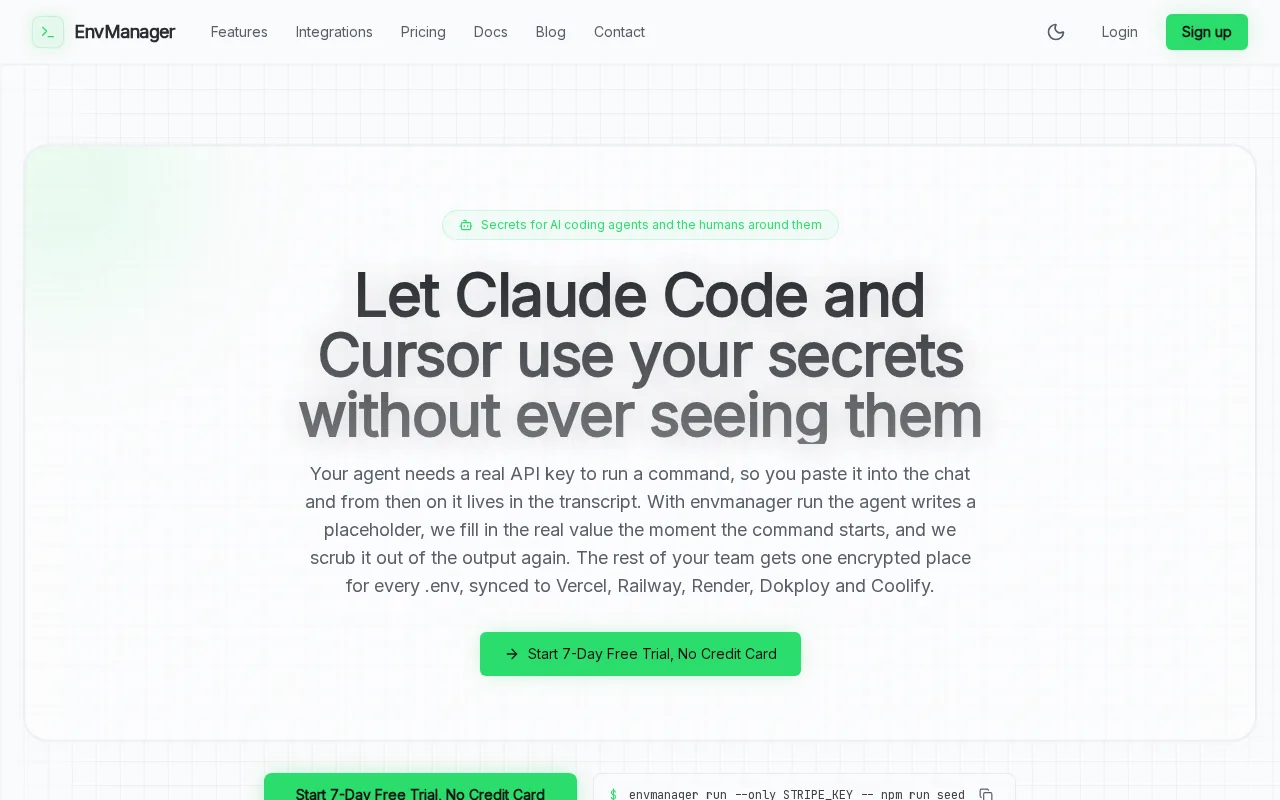
We built EnvManager for a common failure point: secrets copied into chat, email, tickets, or local files. Every value has a controlled home. Teams can sync secrets to local machines and CI/CD pipelines without pasting them into build scripts. The result is a cleaner trail for reviews and a smaller chance of an old key staying in circulation.
EnvManager also fits teams that need audit evidence around developer access. Version control shows when a value changed. Role-based access shows who could reach it. An immutable audit trail helps explain what happened during a review. For teams comparing secure environment variable management features, the key question is simple: can developers use the tool without changing every deployment workflow?
The caveat is scope. EnvManager focuses on secrets and configuration access. It won't replace cloud posture scanning or web application testing. Use it when your audit starts with API keys, database credentials, deployment variables, and access evidence. Runenvmanager pullto sync approved values into a working environment.
2. HashiCorp Vault, centralized secrets storage and rotation
HashiCorp Vault is a secrets management tool for organizations that need centralized storage and secret rotation. It fits platform teams that manage many services, workloads, or infrastructure boundaries.

Vault earns a place here because it treats secret access as a managed service rather than a file handoff. Security teams can set policies around who or what may request a secret. Rotation can reduce how long a compromised credential remains useful. That is especially helpful when a company has many applications using the same class of credential.
The main strength is central control. A team can define a policy once, then apply it to the workloads that need access. This approach also helps during an audit because reviewers can inspect the rules around secret retrieval instead of asking developers to explain scattered local files.
Vault takes more planning than a small team may expect. You need to design its operating model, access policies, and connection points. A rushed setup can move complexity into the vault without removing it. Choose it when your team has the staff to run a shared secrets service and needs that level of control.
3. AWS Secrets Manager, AWS-native secret lifecycle management
AWS Secrets Manager is security audit software for teams that store application credentials inside AWS. It manages the lifecycle of database passwords, API keys, OAuth tokens, and similar secrets.

AWS recommends Secrets Manager for sensitive secrets, while it positions a simpler key-value configuration service for basic configuration. Secrets Manager can rotate credentials on a schedule, replicate secrets across Regions, and encrypt them with encryption keys. Its API model also lets an application retrieve a secret after authenticating through an IAM role.
That native fit is its main advantage. AWS teams can connect secret access with IAM permissions, resource policies, audit activity, and monitoring data. AWS also describes direct connections with compliance monitoring services for compliance monitoring. These controls help a reviewer trace access patterns without building a separate audit path.
For hybrid estates, the design gets harder. Multiple AWS accounts can create separate secret stores and separate ownership rules. A central team may need a sync layer to keep policy consistent. The AWS guidance on secrets and configuration services makes the boundary clear: use Secrets Manager for sensitive credentials, not every piece of application configuration.
Pick AWS Secrets Manager when AWS is already your control plane. If your main pain is shared .env files across local development and several CI systems, EnvManager may give developers a simpler daily workflow.
4. Wiz's CSPM, continuous cloud posture visibility
Wiz's CSPM is security audit software for cloud posture. It checks cloud configurations and helps teams find misconfigurations, exposure, and identity risks across deployed resources.

CSPM is useful when the question is bigger than one secret. It can show whether a storage bucket is exposed, whether a role has too much access, or whether a new cloud resource breaks a policy. The value comes from context. A finding tied to public exposure, sensitive data, and an overpowered identity deserves more attention than an isolated low-risk setting.
Wiz describes modern cloud assessment as continuous discovery rather than a quarterly snapshot. Cloud resources appear and disappear quickly. A review that was correct on Monday may miss a new asset on Tuesday. Continuous visibility helps teams keep an inventory of resources, identities, networks, and data stores.
Wiz also maps findings to standards such as CIS Benchmarks, NIST, PCI DSS, HIPAA, and SOC 2. That can help security teams collect evidence while they fix the underlying issue. Its CSPM focus makes it a strong fit for cloud security teams, but it does not replace a secrets manager for developer-held environment values. See the official explanation of CSPM and continuous cloud posture monitoring for the category's operating model.
The trade-off is alert volume and setup effort. A posture tool works best when owners are assigned and findings flow into a remediation process. Choose Wiz's CSPM when cloud configuration and attack paths are your main audit concern.
5. OWASP ZAP, automated web application security testing
OWASP ZAP is an open-source web application security scanner. It fits developers and security testers who need to test a running web application for weaknesses.

ZAP uses a black-box testing model. It sends requests to an application and studies the responses for signs of security flaws. That makes it useful for testing behavior that source-code scanners cannot see, such as request handling, session behavior, authentication flows, and input validation.
It belongs in a security audit software stack because application testing covers a different layer than cloud posture or secrets management. A team might use it against a staging site after deployment, then review the findings before release. ZAP can also help test mobile application traffic when requests pass through the proxy.
The limitation is that ZAP does not tell you why a cloud role has excess access or who owns a leaked environment key. It is a testing tool, not a full governance system. Teams also need safe test accounts and a clear staging boundary. Use it when you need to probe a live application without relying only on code review.
Security Audit Software Comparison
The best choice depends on the layer under review. Secrets tools protect credentials. CSPM tools inspect cloud state. Web scanners test application behavior. Treating them as interchangeable creates blind spots.
| Tool | Best fit | Audit focus | Key decision |
|---|---|---|---|
| EnvManager | Developer and CI/CD secrets | Encryption, RBAC, version history, access trail | Choose it when .env files and pipeline secrets need one controlled workflow. |
| HashiCorp Vault | Central secrets operations | Secure storage and rotation | Choose it when your platform team can run a shared vault service. |
| AWS Secrets Manager | AWS workloads | Secret lifecycle, IAM access, rotation, logging | Choose it when AWS already owns identity and deployment control. |
| Wiz's CSPM | Cloud security posture | Asset visibility and misconfiguration detection | Choose it when cloud exposure and attack paths drive the audit. |
| OWASP ZAP | Web application testing | Running application vulnerabilities | Choose it when you need active tests against a safe target. |
Integration should be a buying criterion, not a footnote. A scanner that produces findings but gives no path into ownership or remediation can leave your team with another queue. Teams that need findings to feed evidence collection and audit workflows may also compare compliance automation tools. The same is true for RBAC. Fine-grained access by environment, path, or identity matters when developers, release staff, and auditors need different views.
Audit logs deserve the same test. Ask what gets recorded, how long records remain available, and whether the log shows the actor, target, time, and action. Review scoped permissions, connection controls, and auditing of user actions. Those are useful checks for any security audit platform.
Pricing transparency is another weak point across this category. Many vendors do not publish a starting price or free tier. Ask for the cost of users, cloud accounts, scan volume, log retention, and support before you compare quotes. A low entry price can change once every pipeline and environment is included.
FAQ
What is security audit software?
Security audit software checks systems for weaknesses, access problems, policy violations, or missing evidence. The category includes secrets managers, cloud posture tools, source scanners, and web application testers. No single product covers every layer well. Start by naming the asset under review, then choose software that can produce findings and usable proof.
What is the best security audit software for secrets?
EnvManager is a strong fit for teams managing .env files and CI/CD secrets. It encrypts values, keeps versions, supports RBAC, and records access activity. AWS Secrets Manager fits AWS-native workloads, while HashiCorp Vault fits teams that need a centralized secrets service. Your choice should follow where developers retrieve secrets each day.
Can security audit software replace a penetration test?
Security audit software can't fully replace a penetration test. Automated tools find known patterns and configuration errors at scale. A skilled tester can follow unusual attack paths and test business logic. Use software for repeat checks, then add human testing when customer data, production access, or a major release is in scope.
What should security audit software record?
Good security audit software should record the actor, action, target, time, and result. It should also preserve enough history for an investigation. For secrets, that may mean access and value changes. For cloud posture, it may mean configuration changes and ownership. Ask to see a sample audit record before you buy.
How do I choose a tool for a small DevOps team?
Choose the tool that fixes your most frequent failure first. If developers share secrets, start with EnvManager. If cloud settings drift, start with CSPM. If releases need active web testing, start with OWASP ZAP. Keep the first rollout narrow, assign an owner, and measure whether findings reach a person who can fix them.
Conclusion
For most teams, start with EnvManager when secret handling is the audit gap, then add cloud or application testing as scope grows. Inventory your current .env files and CI/CD variables this week. Move one shared environment into controlled storage, assign access by role, and review the resulting audit trail before expanding.