
Best Secure API Gateway Options for 2026
Compare the best secure API gateway options for authentication, traffic control, monitoring, and secret management for US engineering teams.
Many API gateways promise security but say little about audit trails or token checks. That gap can leave your team with weak compliance evidence when an incident hits. Here are six secure API gateway options, with the best fit for each deployment model.
We reviewed 8 of the highest-ranking comparison pages for best API gateway, including API7.ai, Apidog, DigitalAPI, SecureCoding, SourceForge, WorldMetrics, Zuplo, and TechTarget. Token validation or JWT handling appeared in 7 of the 8 pages. Audit trails or audit logging showed up in only 3, and secret storage separate from the gateway appeared in just 2. Authentication gets covered almost everywhere, while audit evidence and secret handling remain the pieces most comparisons leave undocumented.
1. EnvManager
EnvManager is a self-serve SaaS platform for encrypted environment files and API secrets. It fits DevOps teams that need a clean link between local development, CI/CD, and access control.

We encrypt every value with AES-256 on import. Teams can version-control .env files without placing plain secrets in Git. Role-based access control, or RBAC, limits who can view or change each environment. An immutable audit trail gives security teams a record of secret access and edits.
That matters when an API gateway rejects a token and someone needs to trace the full path. You can see which secret version reached a pipeline, then roll back the change instead of asking developers to compare copied files.
EnvManager also syncs secrets to local machines and CI/CD pipelines. That removes the risky handoff where a developer pastes a key into Slack or a ticket. Our encrypted secret management features help keep the gateway layer and the secret layer under one clear workflow.
The caveat is scope. EnvManager manages the secrets behind your gateway. It doesn't replace routing, rate limits, or request inspection. Pair it with a gateway that fits your traffic pattern, then runenvmanager pullto sync approved values.
2. Azure API Management, best for Azure-native API security
Azure API Management is a managed gateway for teams that already build around Azure identity and services. It suits Microsoft-first engineering groups with APIs on serverless functions, Logic Apps, or other Azure backends.

Its main strength is depth inside the Azure stack. It connects with Azure identity services, Application Insights, and Key Vault. Microsoft documents OAuth 2.0 support between clients and the gateway, between the gateway and backends, or across both paths in Azure API Management authentication documentation.
The gateway can validate JWTs before a request reaches a backend. It can check issuer, audience, and other claims. That gives teams a policy layer in front of older APIs that cannot handle OAuth on their own. Mutual TLS can then protect the onward connection to the backend.
Azure API Management also supports a self-hosted gateway for teams with hybrid needs. That lets a company keep a central management plane while running gateway components closer to private services.
The tradeoff is platform lock-in and policy complexity. Teams that dislike XML policy files may prefer code-based rules. Costs also vary by tier, capacity, and network needs, so model staging and production before committing.
Pick this option when Azure identity and service integration matter more than cloud portability.
3. Zuplo, best for serverless and AI API protection
Zuplo is a managed gateway for teams that want private cloud connectivity without running gateway servers. It works well for serverless APIs, AI traffic, and teams that may deploy across more than one cloud.
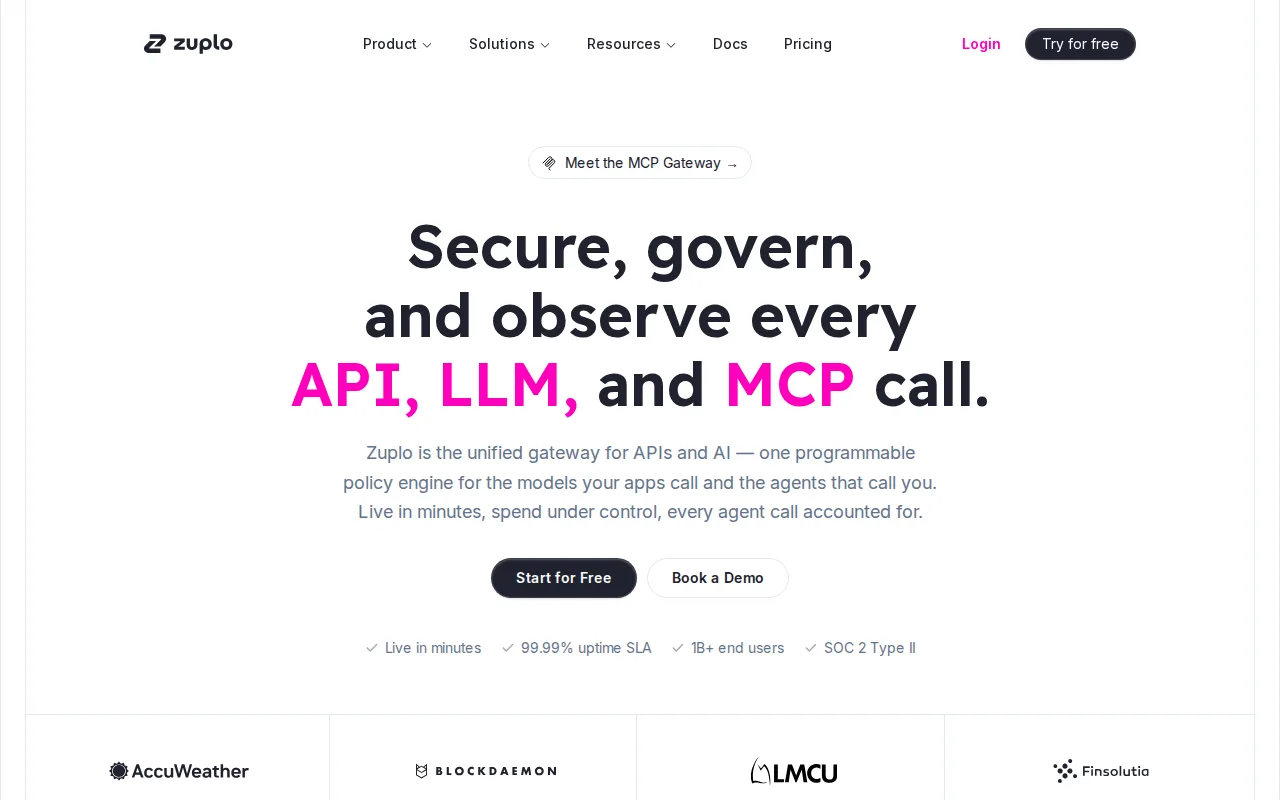
Its Azure deployment model includes Private Link and VNet peering. Those connections let a gateway reach private backends without giving them public IP addresses. Zuplo also supports JWT validation and SSO, which helps teams keep identity rules close to their existing setup.
Policy logic uses TypeScript instead of XML. That gives developers familiar language tools, type checks, and access to standard web APIs. A Git push can also become the deployment event, which fits teams that treat infrastructure changes as code.
AI workloads add another reason to consider it. Its MCP Gateway includes RBAC and audit logging for tool calls, which is useful when agents can reach sensitive business APIs.
There is still a tradeoff. A managed service gives you less control over the gateway runtime than a fully self-hosted product. You also need to confirm that its network model, data region, and policy language match your internal standards.
Choose Zuplo when you want managed operations, private connectivity, and a path beyond one cloud.
4. Kong, best for flexible self-managed deployments
Kong fits teams that want control over gateway placement, plugins, and network design. It is a strong match for platform groups that can run Kubernetes or manage private cloud infrastructure.
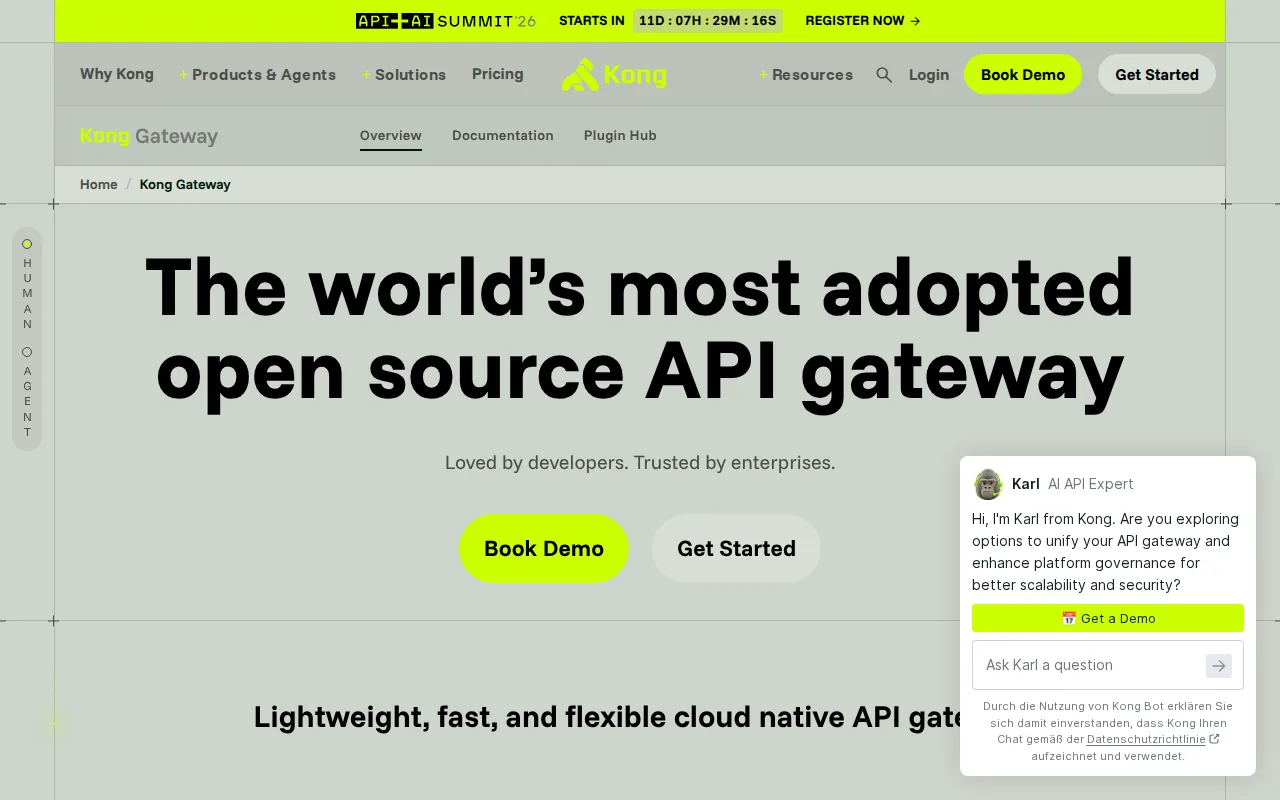
Kong supports Azure VNet peering, OIDC token validation, and private cloud deployment options. Its managed SaaS option provides a provider-managed deployment model. Teams can evaluate the managed SaaS option alongside self-managed deployment.
The managed option can connect to Azure private networks through virtual network peering and private DNS. Kong also documents managed Redis support for compatible plugins. That can reduce the work needed for gateway features that depend on shared cache data.
Self-managed deployment gives platform engineers more room to shape the runtime. They can place gateway nodes near services, control release timing, and apply plugins that match local standards. The cost is operational work. Your team still needs a plan for upgrades, monitoring, failure recovery, and access to the control plane.
Kong is a poor fit if nobody owns that work. A flexible gateway can become a security risk when patches and plugin reviews fall between team responsibilities. Set clear ownership before choosing the self-managed path.
Pick Kong when runtime control matters enough to justify platform operations.
5. Apigee, best for hybrid enterprise API governance
Apigee is an enterprise API management choice for organizations that need governance across a large API estate. It fits teams that want a central control model while keeping runtime workloads near regulated or private systems.
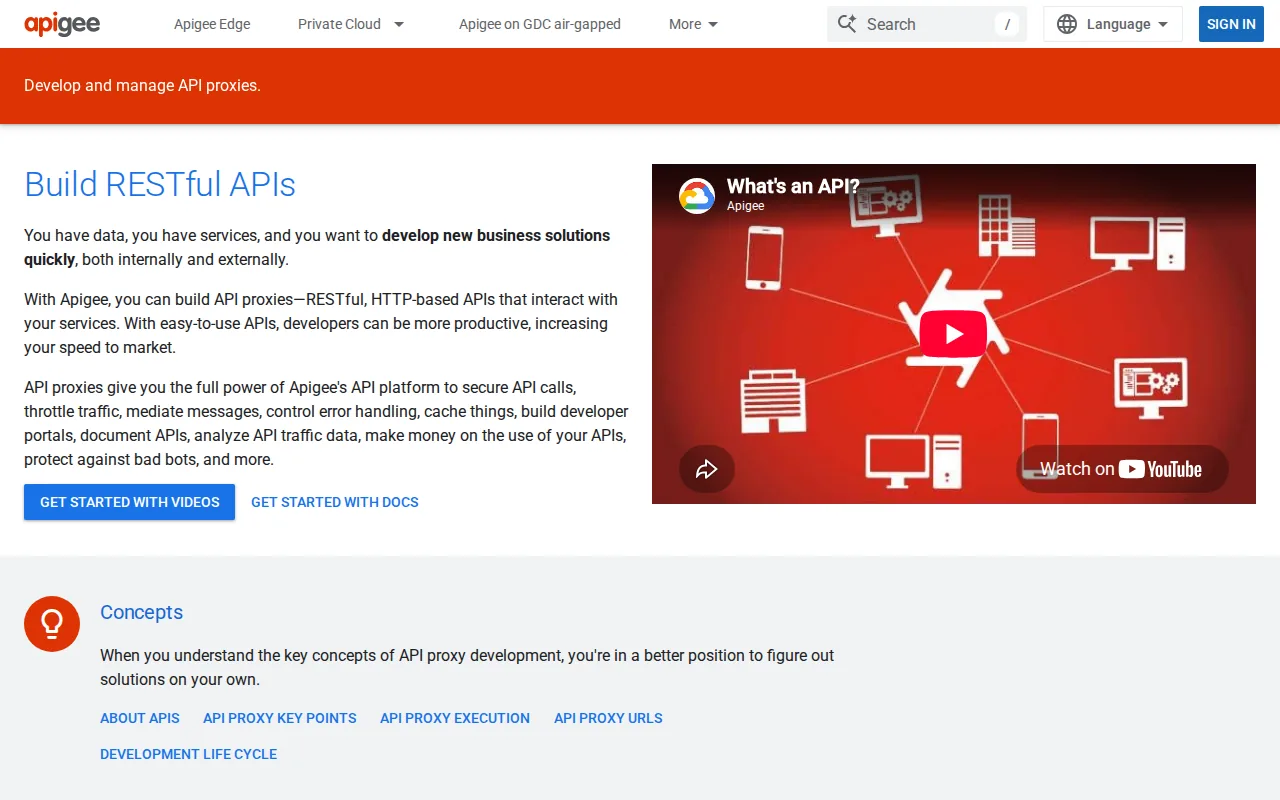
The grounded deployment model is hybrid. Runtime components can run on Azure Kubernetes Service for data locality, while the control plane runs on Google Cloud. That split can help a company keep traffic processing closer to its own network boundaries.
Apigee also brings analytics for API programs that need usage data across teams. Governance groups can use that view to spot unused APIs, review adoption, and set common rules. The value grows when many business units publish APIs with different owners.
Hybrid control has a price in complexity. Your team must understand the connection between the Azure runtime and Google Cloud control plane. Identity, logging, network paths, and incident response need one documented operating model.
Apigee makes more sense for an established API program than for a small team with one public service. If you only need a thin proxy in front of a few endpoints, its governance model may be more than you need.
Use it when central policy and hybrid placement outweigh the work of operating across cloud boundaries.
6. Amazon API Gateway, best for managed AWS API security
Amazon API Gateway is a managed choice for AWS-first teams that want traffic control close to Lambda and other AWS services. It suits small teams that prefer managed infrastructure over gateway operations.

Its security controls include authorization, throttling, usage plans, and monitoring. AWS usage plans can connect API keys to selected stages and methods. They can also set request rates and quotas for clients.
That distinction matters. An API key can identify a customer, but it should not carry the full burden of authentication. Store keys in a secret manager, keep them out of browser code, and give each environment its own value.
Amazon API Gateway is easy to connect to AWS services. The tradeoff is that a broader program may need more AWS components for identity, logging, and web filtering. Those pieces can raise both the bill and the number of systems your team must review during an incident.
Pick it when AWS integration and managed operations are your first concerns. Pair it with disciplined secret storage, such as EnvManager, rather than leaving keys in deployment files.
Secure API Gateway Comparison Table
The right secure API gateway depends on where you want control to live. Managed services reduce server work. Self-hosted and hybrid models give platform teams more say over placement and policy.
| Option | Best fit | Security strength | Main tradeoff |
|---|---|---|---|
| EnvManager | Secret workflow beside gateway operations | Encrypted values, RBAC, version history, audit trail | Doesn't route API traffic |
| Azure API Management | Azure-native API programs | Entra ID, JWT validation, Azure policy integration | Azure dependence and policy complexity |
| Zuplo | Serverless, private, and AI APIs | Private networking, Entra ID, prompt injection protection | Less runtime control than self-hosting |
| Kong | Platform teams with deployment expertise | Private networking, OIDC validation, plugin flexibility | Self-managed operations can be heavy |
| Apigee | Large hybrid API estates | Central governance with hybrid runtime placement | Cross-cloud control plane complexity |
| Amazon API Gateway | AWS-first serverless teams | Authorization, throttling, usage plans, monitoring | Best-effort quotas and extra AWS services |
Public product details also show a visibility problem. Security features appear in only 11 of 19 listed gateways, while authentication details appear in six. Audit logging appears in five. Treat missing documentation as a question for the vendor, not as proof that the control exists.
Before you sign a contract, ask for a test of token rejection, secret rotation, private backend access, and audit export. Your team should see the evidence in a working environment.
FAQ
What is a secure API gateway?
A secure API gateway controls access between clients and backend APIs. It can validate tokens, enforce rate limits, route requests, and record activity. A secure API gateway still depends on good secret storage and identity design. Keep keys out of source code, define least-privilege access, and confirm that logs capture the events your audit team needs.
Which secure API gateway is best for Azure?
Azure API Management is the natural fit for teams committed to Azure identity and services. It supports Entra ID integration and JWT validation. Zuplo may fit better when you want Azure private networking without staying tied to one cloud. Kong can work when your team wants more control over deployment and plugin behavior.
Does an API gateway replace a secrets manager?
No, an API gateway doesn't replace a secrets manager. The gateway protects request paths, while a secrets manager stores credentials and configuration values. EnvManager handles encrypted .env files, access roles, version history, and CI/CD sync. Keep these systems connected but separate so a route policy never becomes the only place holding a production key.
Are API keys enough to secure an API?
API keys alone are usually not enough to secure an API. AWS warns that keys identify clients but shouldn't provide the full authentication or authorization model. Use IAM, OAuth 2.0, JWT validation, or an authorizer when the API needs stronger identity checks. Store each key in a controlled secret system and follow API authentication best practices when designing access controls and rotation procedures.
Should I choose a managed or self-hosted gateway?
Choose a managed gateway when your team wants less infrastructure work. Choose self-hosting when network placement, plugin control, or data locality justify the added work. Managed options reduce patch duties, while self-hosted options require clear ownership for upgrades and incident response. Test private routing and audit export before making the final choice.
Conclusion
For most teams, start with EnvManager for secret control, then pair it with the gateway that matches your cloud and operating model. If you're Azure-first, test Azure API Management or Zuplo. If you run a platform team, evaluate Kong or Apigee. Before rollout, prove token rejection, private backend access, and audit export with one production-like API.