
Best API Security Testing Tools
Compare the best API security testing tools for US teams, with CI/CD testing, API discovery, threat detection, and secret management.
API security testing tools often promise automation, but the key question is simpler: where do they run? The strongest options fit your delivery flow, catch flaws before release, and give security teams useful proof. Here are five named picks, plus the toolchain gaps to check before you buy.
1. EnvManager
EnvManager is a self-serve secret management platform for teams that need safer API keys and environment values. It’s best for DevOps teams, SaaS developers, and security leads who still move secrets through shared files, chat, or manual CI/CD settings.
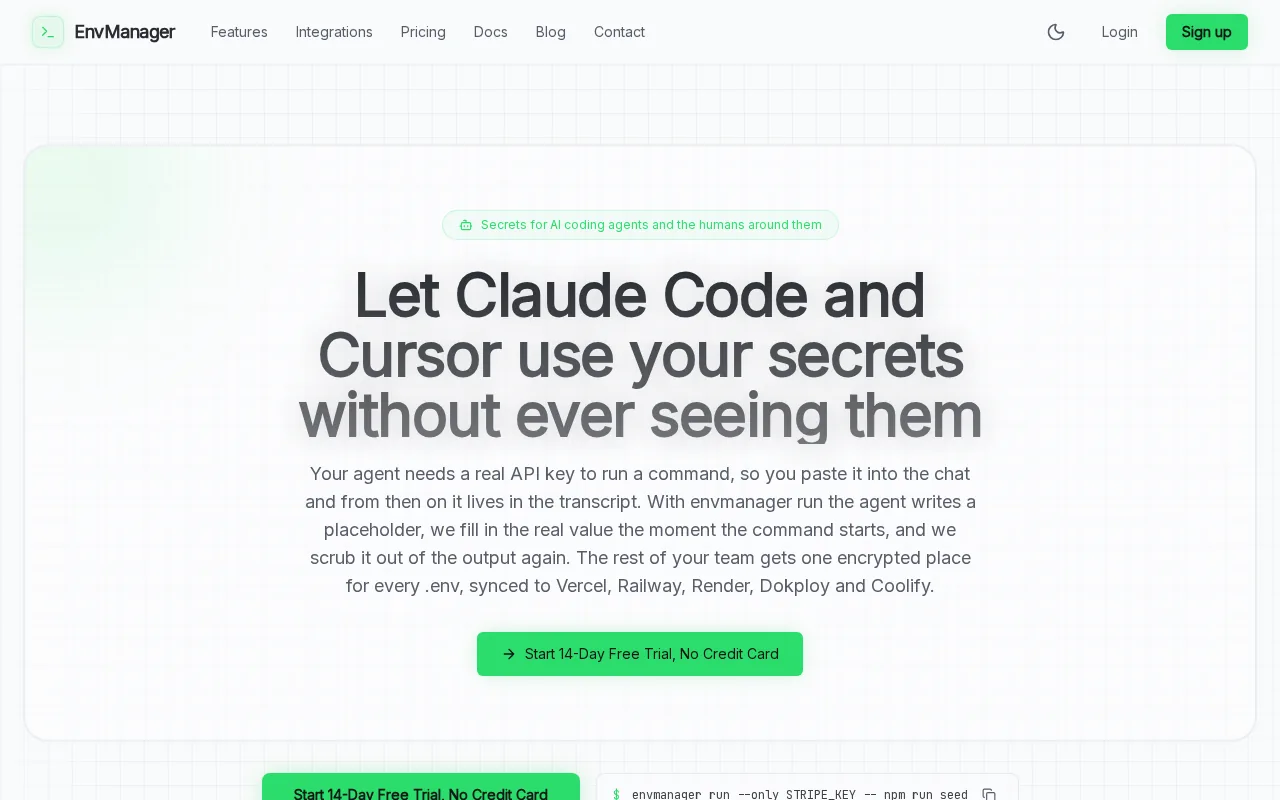
We encrypt every value with AES-256 on import. EnvManager also keeps version history and uses role-based access control, or RBAC, so each person gets the access their role needs. That matters when an API test runs in CI and needs a token, but developers shouldn’t see every production secret.
Teams can sync secrets to local machines and CI/CD pipelines without copying values into source code. An immutable audit trail helps you see who changed access or updated a secret. JIT access can also limit sensitive access to the short window when a test or deployment needs it.
EnvManager is not an endpoint scanner. It won’t find broken object-level authorization or a weak API schema by itself. Instead, it closes the secret-handling gap around your API security testing tools. That gap is easy to miss: a well-tested API can still fail when a long-lived test key sits in a repository.
For a closer look at the secret side of the workflow, see these API key security best practices. Then runenvmanager pullin the same pipeline that starts your security tests.
2. Akamai API Security, CI/CD-focused active testing
Akamai API Security is best for teams that want active testing inside their CI/CD pipeline. Its stated differentiator is Active Testing, which runs more than 150 advanced tests as part of the delivery process.
That pipeline fit is the main reason it earns a place on this list. A security check that runs during a pull request can catch a flaw while the developer still understands the code. A check that waits for a quarterly review may find the same flaw after several releases have shipped.
The approach also gives engineering teams a clear place to set failure rules. You might block a release for an authentication bypass while allowing a lower-risk finding to go through a review queue. The exact policy depends on your API and risk level, so confirm how much control the product gives your team.
Akamai’s limitation is procurement detail. Public product summaries don’t give enough information about price, deployment effort, test limits, or false-positive handling. Ask for a proof of concept that uses your own API specification and one representative pipeline.
Pick Akamai when pipeline-based active testing is your first requirement. Don’t pick it from a feature list alone. Make the vendor show how a failed test appears in your existing developer workflow.
3-wallarm-api-security-platform">3-wallarm API Security Platform, adaptive threat detection
Wallarm API Security Platform is best for teams that need testing plus traffic-based detection. Wallarm says its machine learning approach adapts to changing attack patterns, while automated scanning and traffic analysis help find issues after deployment.
Its testing workflow can turn existing functional tests into security tests. A container captures API requests as a baseline, then creates checks for each build. Teams can define policies for parameters, payloads, and fuzzer settings.
The pipeline connection is useful because it keeps security work near the code change. Wallarm also describes reporting issues to the CI pipeline and ticketing systems. Its listed integrations include Jenkins and GitLab, supporting DevOps workflows.
The caveat is scope. A traffic-aware platform can surface runtime behavior that a schema-only scan misses, but teams still need custom tests for business rules. A tool may detect a suspicious request without understanding that a user should not approve their own refund.
Wallarm fits teams that want continuous testing and runtime context in one workflow. Start with one high-value API and compare its findings against your current functional test set.
4. 42Crunch API Security Platform, OpenAPI-native protection
42Crunch API Security Platform is best for teams that treat OpenAPI files as a core part of API design. It supports automated security assessments, continuous protection, and testing inside CI/CD pipelines.
The OpenAPI focus gives security and development teams a shared reference point. A specification can describe endpoints, methods, parameters, and expected responses. A tool can then test those declared paths instead of relying only on traffic it happens to observe.
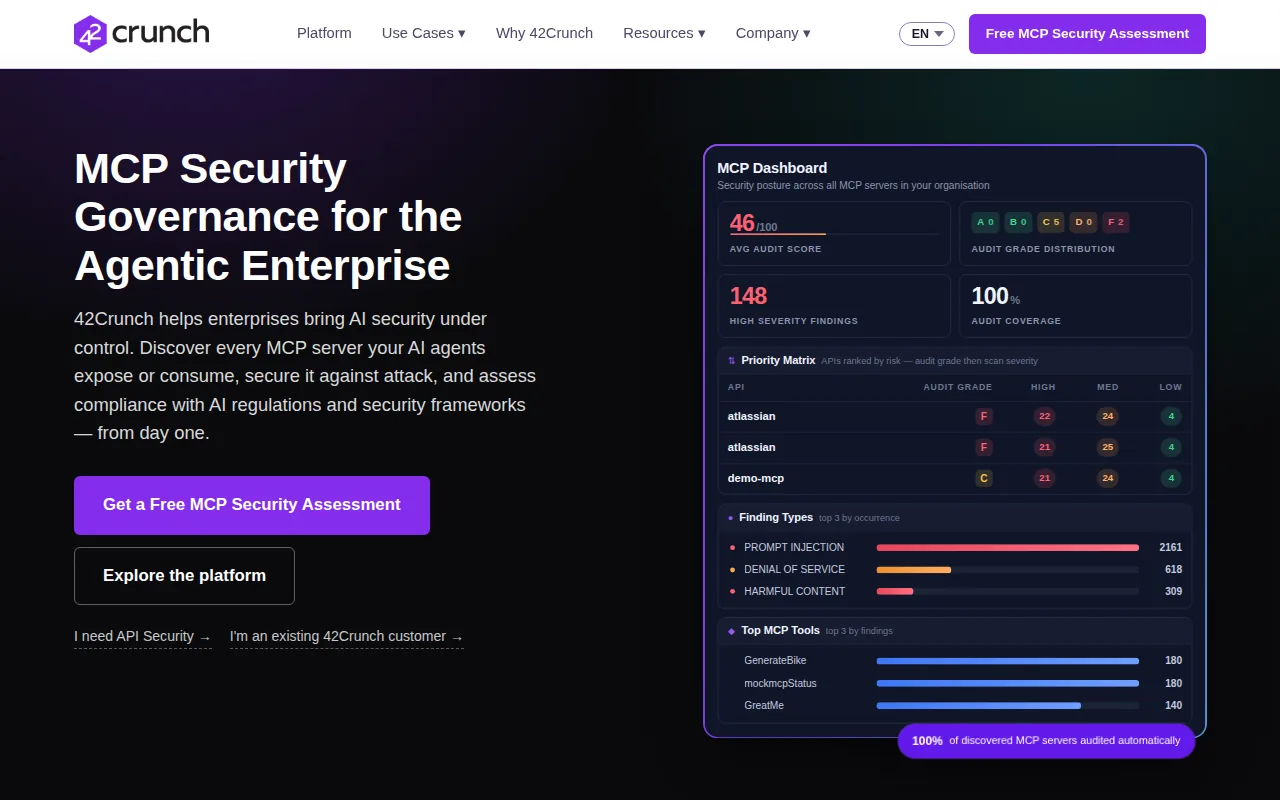
That approach works well during design review. If a new endpoint lacks the right authentication rule, the team can catch it before the service reaches a staging environment. Automated enforcement can also help keep API standards from becoming a document nobody checks.

The main limitation is coverage outside the specification. Shadow APIs, undocumented routes, and business logic flaws may not appear in an OpenAPI file. You’ll need discovery and runtime checks if your inventory is incomplete. Also ask how the platform handles schema drift, custom authentication flows, and findings that require manual review.
Choose 42Crunch when API contracts are already part of your engineering process. It’s a weaker fit if your specifications are missing, stale, or treated as optional notes.
5. APISec, continuous testing and compliance reporting
APISec is best for teams that want continuous API testing with risk reports and compliance evidence. Its platform is described as automating the search for vulnerabilities, misconfigurations, and compliance issues.
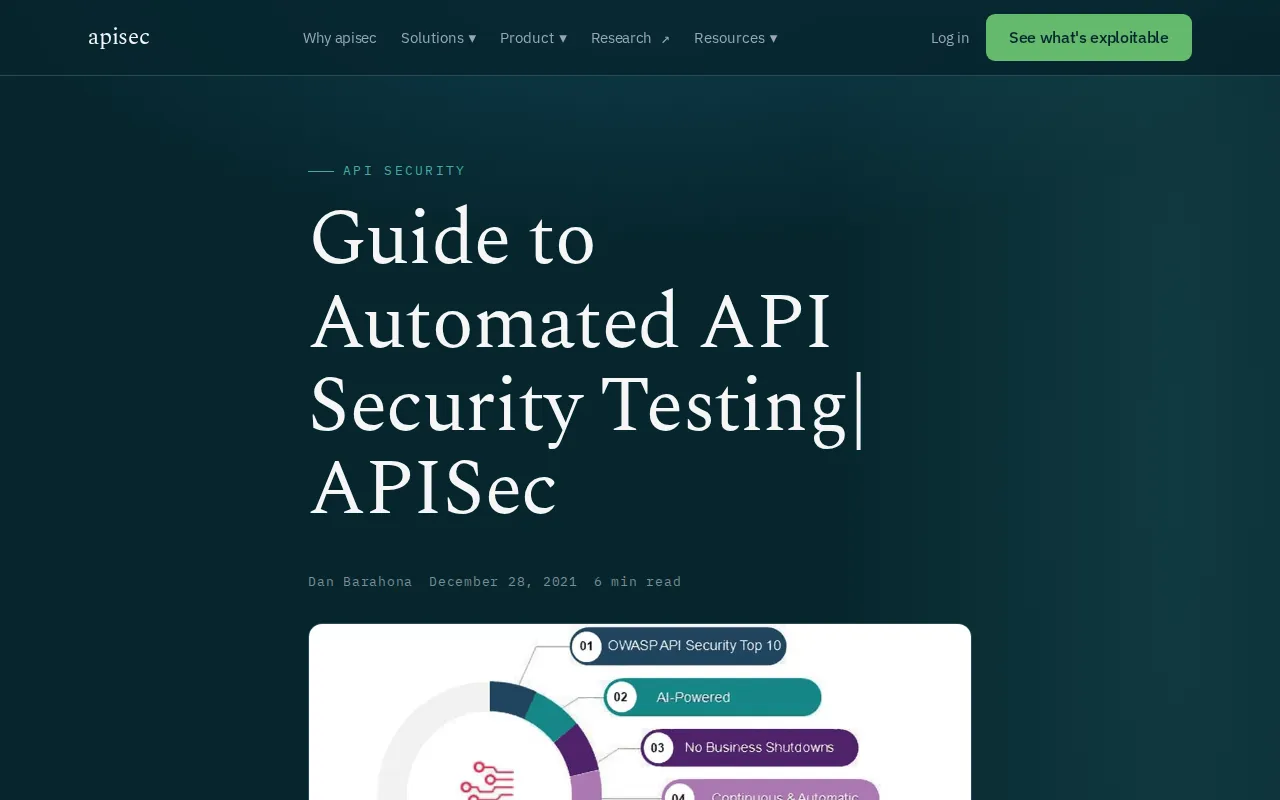
That matters because API flaws often sit in the way a request changes state, not only in a malformed input. A useful test should ask if the right user can perform the right action.
The platform’s stated workflow supports continuous monitoring, reporting, and development integrations. In a mature pipeline, a test can run after a code change, during a pull request, and again in staging. Teams can then set rules for which findings block deployment.
APISec also points buyers toward coverage for REST, SOAP, GraphQL, WebSocket, and event-driven APIs. Treat that as a question for your trial, not a reason to skip validation. Ask the vendor to test each API style you use and show how it handles API authentication best practices, including OAuth2, JWT, API keys, and role-based access.
Its limitation is the same one many API security testing tools face: pricing and operating limits are hard to judge from public summaries. Ask about endpoint volume, scan duration, report exports, support response, and the cost of adding teams.
APISec is a sound candidate when compliance reporting must sit beside continuous testing. Keep manual review in the process for complex business flows.
API security testing tools comparison table
The right choice depends on the gap you need to close. This comparison focuses on the operating model, not vague claims about being automated.
| Tool | Best fit | Main testing angle | Pipeline or workflow signal | Watch before buying |
|---|---|---|---|---|
| EnvManager | Secret handling around API tests | Protected API keys and environment values | CI/CD secret sync | Needs a separate endpoint testing tool |
| Akamai API Security | Active testing in CI/CD | 150+ advanced active tests | Direct CI/CD integration | Confirm limits and failure policy |
| Wallarm API Security Platform | Testing with runtime traffic context | Schema testing and threat replay | CI/CD and ticketing workflows | Validate business logic coverage |
| 42Crunch API Security Platform | OpenAPI-led development | Specification-based assessment | CI/CD enforcement | Check coverage for undocumented APIs |
| APISec | Continuous testing and reports | Vulnerability, misconfiguration, and compliance checks | Development workflow integration | Test scan speed and report depth |
Integration detail is a major buying signal. Many vendors describe automation, but fewer explain where the tests run or how results reach developers. Ask for a live demo with your pipeline. Also request written answers about pricing, endpoint limits, supported API styles, and manual testing needs.
Keep secret storage separate from endpoint testing in your design. EnvManager can supply short-lived or tightly controlled values to the pipeline, while a dedicated scanner tests the API itself. That split makes ownership clearer.
FAQ
What are the best API security testing tools?
The best API security testing tools depend on your main risk. EnvManager fits secret control, Akamai fits active CI/CD testing, Wallarm fits runtime-aware testing, 42Crunch fits OpenAPI workflows, and APISec fits continuous testing with reports. Test one high-value API before you commit to a wider rollout.
What should API security testing tools check?
API security testing tools should check authentication, authorization, input validation, rate limits, and business logic. They should also help find undocumented endpoints and excessive data exposure. Ask how the tool handles BOLA, token misuse, schema flaws, and multi-step actions instead of relying on a generic vulnerability count.
Can API security testing run in CI/CD?
Yes, API security testing can run in CI/CD when the tool supports pipeline triggers and clear failure rules. Your team should still test scan time, result format, secrets handling, and the process for overriding a false positive.
Do API security testing tools replace penetration testing?
API security testing tools don’t fully replace manual penetration testing. Automated checks scale across builds, while a skilled tester can explore unusual business flows and chained attacks. Use automation for frequent checks, then schedule manual reviews for high-risk APIs or major changes.
How should API test secrets be stored?
API test secrets should stay outside source code and move through controlled secret storage. EnvManager encrypts values, applies RBAC, keeps version history, and syncs secrets to CI/CD pipelines. Give each test only the access it needs, rotate credentials when exposure is possible, and review the audit trail.
Conclusion
Choose the tool that matches your biggest gap, then prove it on one API change. For many teams, that means pairing a dedicated API scanner with EnvManager for controlled test secrets. Set up a small pipeline trial, run the same checks on a real pull request, and review the findings with both engineering and security.