Best IT Audit Management Software (2026)
Compare the best IT audit management software for evidence tracking, controls, compliance workflows, and secure access management in 2026.
Many IT audit tools describe broad GRC coverage but leave basic details unclear. Audit logs, RBAC, integrations, and secret history often need a closer look. Here are six named options, with EnvManager first for teams whose audit risk starts in .env files and CI/CD secrets.
1. EnvManager
EnvManager is self-serve secret management for teams that need encrypted, version-controlled .env files. It fits DevOps engineers, SaaS developers, engineering leads, and security staff who need clear evidence around secret access.
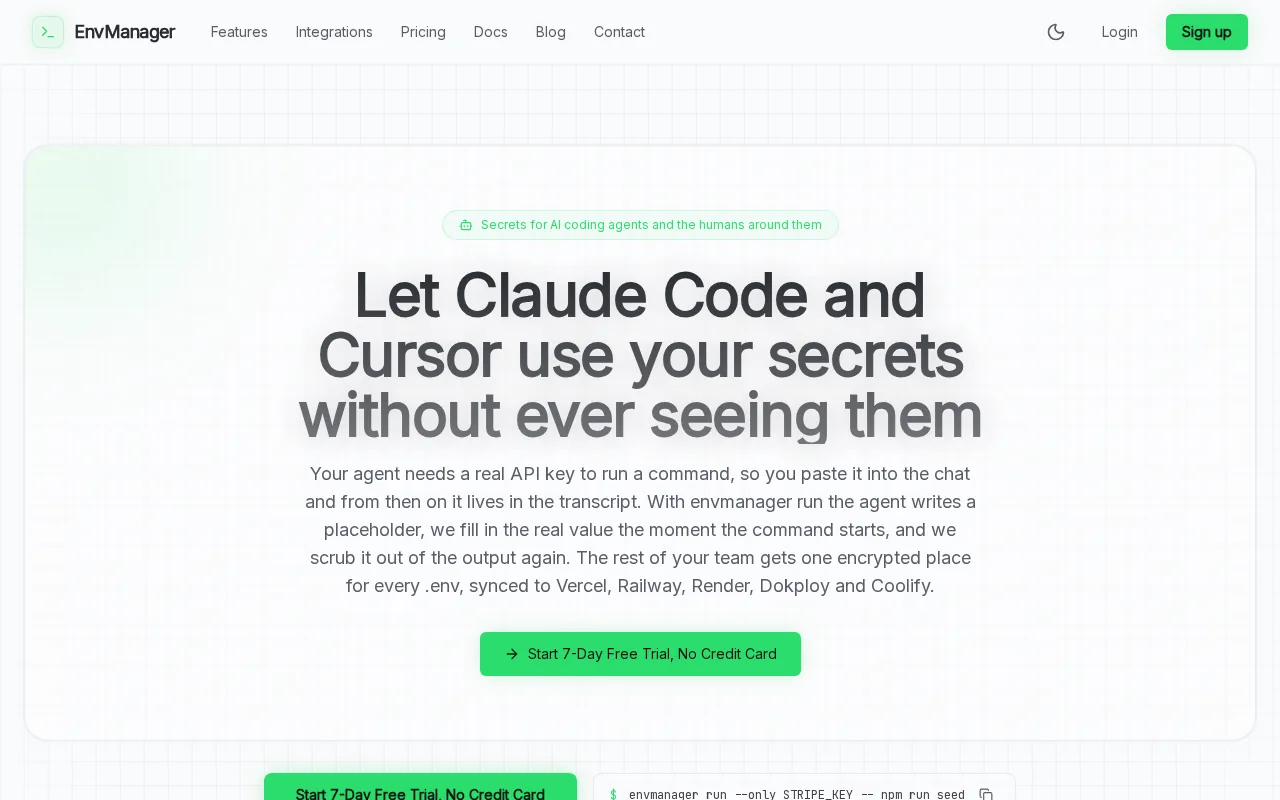
We centralize environment files and control access with role-based permissions. Teams can sync approved secrets to local machines and CI/CD pipelines without passing values through chat or copying them by hand.
That makes EnvManager a strong fit when an IT audit includes API keys, database strings, service tokens, or deployment credentials. Version control shows what changed. Access records show who reached the secret and when. The workflow also gives developers a repeatable path for local work and deploys.
Secrets management also supports audit work beyond the software itself. Guidance on compliance-focused secrets handling links centralized storage, access control, automation, and audit logs with common control needs. You can read more about EnvManager audit and compliance controls when you need exportable evidence for a review.
EnvManager is focused on secrets, not every internal audit task. It won't replace a full audit planning suite for workpapers, board reports, or broad operational risk programs. Choose it when your most urgent audit gap sits inside developer workflows.
2. TeamMate+: Configurable internal audit and GRC workflows
TeamMate+ is audit and GRC software for internal audit, controls, risk, and compliance teams. It is best for departments that need configurable workflows across the audit lifecycle.
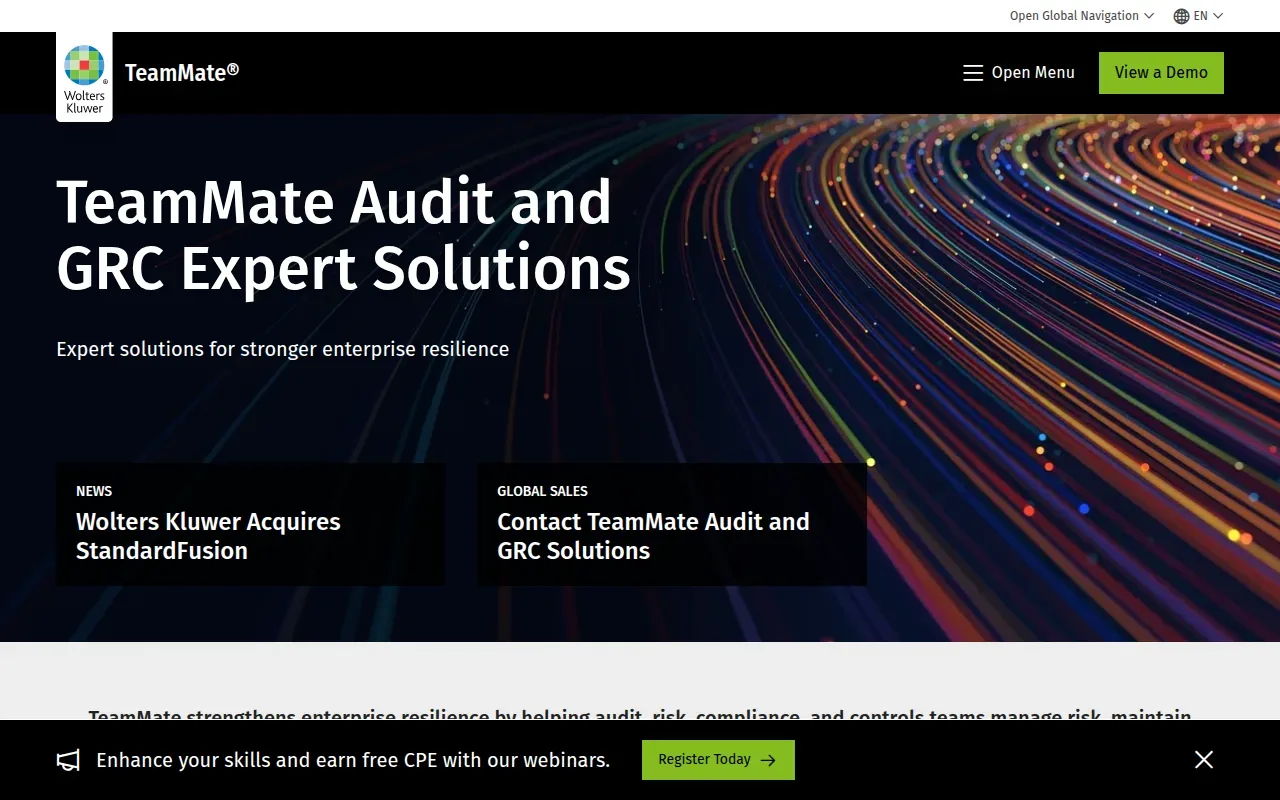
Its strength is breadth within internal audit. TeamMate supports audit workflow design, control work, risk activity, collaboration, and reporting in one suite. Research material also points to simplified audit tasks and reporting, faster issue remediation, and better collaboration between audit teams and other lines of the business.
That setup fits a department where audit work moves through repeatable stages. A manager can define the review path. Auditors can document work in the same system. Owners can then work through findings rather than hunt through email threads.
TeamMate has support for many languages and a presence across many countries, which may help organizations with distributed audit teams. It also has public customer examples that describe use across the end-to-end audit process and working papers.
The tradeoff is setup. Configurable workflow is useful when your method is clear, but it can take time to map local terms, approval rules, and report needs. Buyers should ask for a live workflow using their own audit stages, evidence types, and sign-off rules.
TeamMate+ makes sense when the audit department needs a broad internal audit system rather than a tool focused only on developer secrets.
3. Ideagen Internal Audit: Risk-based planning, testing, and reporting
Ideagen Internal Audit is audit automation built around risk-based planning. It fits internal audit teams that need planning, control testing, reporting, and regulatory work in one system.
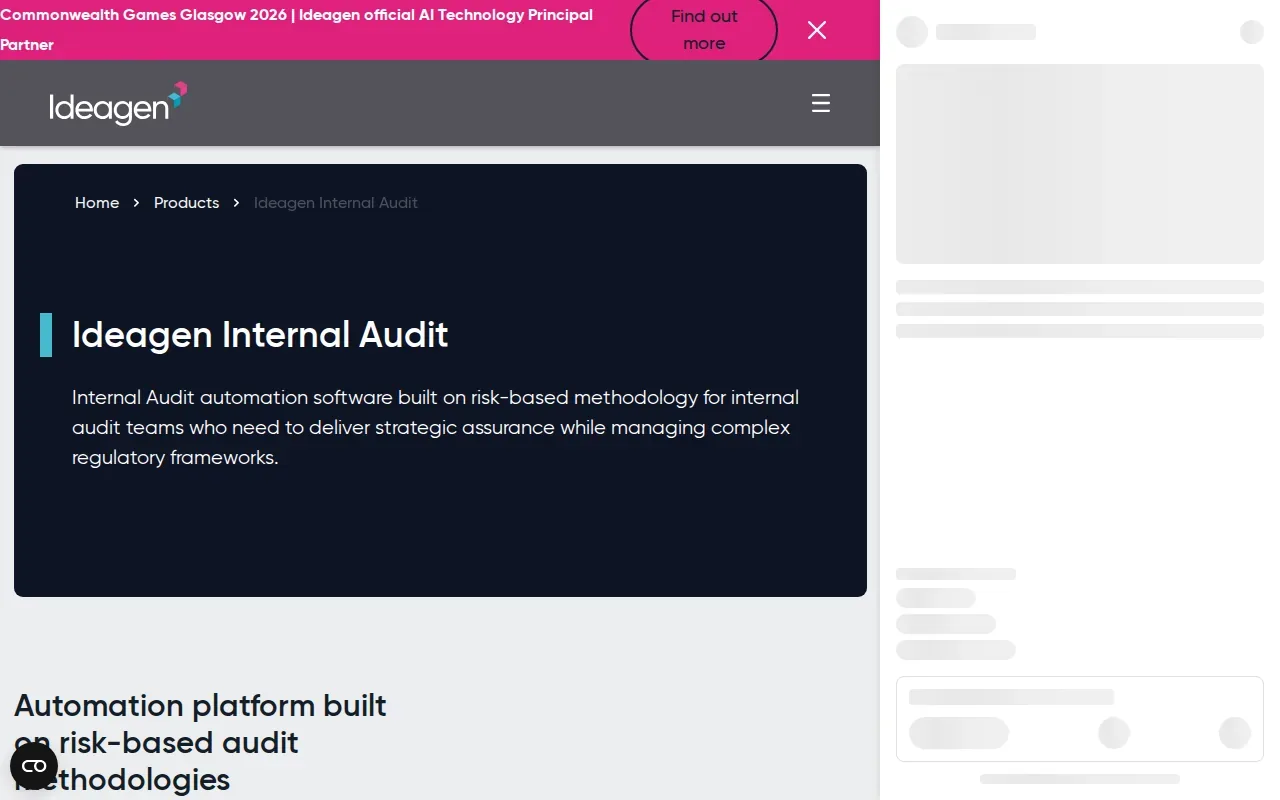
The product covers the audit lifecycle with program management, workpapers, documentation, resource management, stakeholder reporting, and integration with enterprise risk management. Its risk view helps teams adjust plans as risks change instead of relying on a static annual plan.
Control testing is another clear fit. Teams can schedule tests, collect evidence, and track control effectiveness. Dashboards can flag failed thresholds, while findings can feed into the risk register and remediation work.
Ideagen also supports audit trails for review notes and electronic sign-off. That detail matters when an auditor needs to show how a conclusion changed, who reviewed it, and when approval took place. Teams evaluating this capability should also consider audit trail best practices for making records trustworthy during reviews. The platform maps activities to several standards at once, which can reduce duplicate work for teams with more than one framework.
The caveat is scope. Ideagen is built for internal audit operations, not for storing and delivering application secrets. A company may still need a separate secret control layer for development credentials and CI/CD access.
Choose Ideagen when risk-based planning and board-ready reporting sit at the center of your audit workload.
4. MetricStream Internal Audit Management: Enterprise-scale audit operations
MetricStream Internal Audit Management targets internal audit teams in large, complex organizations. It is a fit for groups that need a central risk framework across many business units.
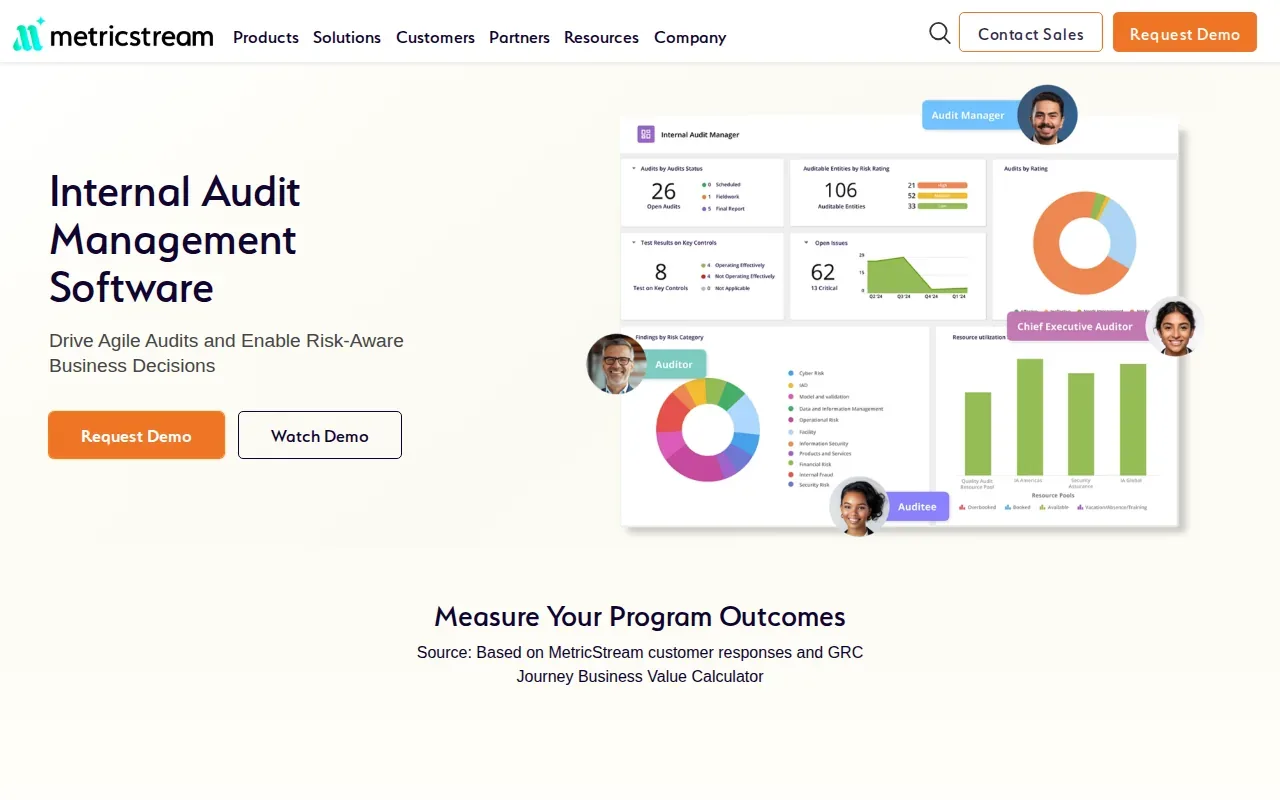
The software helps teams document, manage, and assess risk across the organization. Its wider product context includes internal audit, control effectiveness, issue management, compliance, and IT or cyber risk work. That connected view can help a central audit function compare risk information across business areas.
MetricStream also describes AI-supported internal audit work. The stated focus includes audit fieldwork, control gaps, reporting, and recommendations. For a large audit group, that can reduce manual review work and give managers a shared view of open issues.
The size of the platform is also its main constraint. Smaller IT teams may not need a large risk model or a broad GRC rollout. They may spend more time on governance design than on the audit problem they meant to solve.
Public descriptions of audit software often leave integration and access details vague. That is a problem when a buyer needs evidence from identity systems, cloud tools, or ticket systems. Ask MetricStream to show the exact source, field, owner, and audit record created by each integration.
MetricStream belongs on a shortlist when audit spans a complex organization. It is less attractive when the main need is simple secret access control.
5. Hyperproof: Connected security, compliance, and audit evidence workflows
Hyperproof is an AI-powered GRC platform that connects compliance, risk, security, and audit evidence work. It fits IT, security, risk, and compliance teams that manage several frameworks.
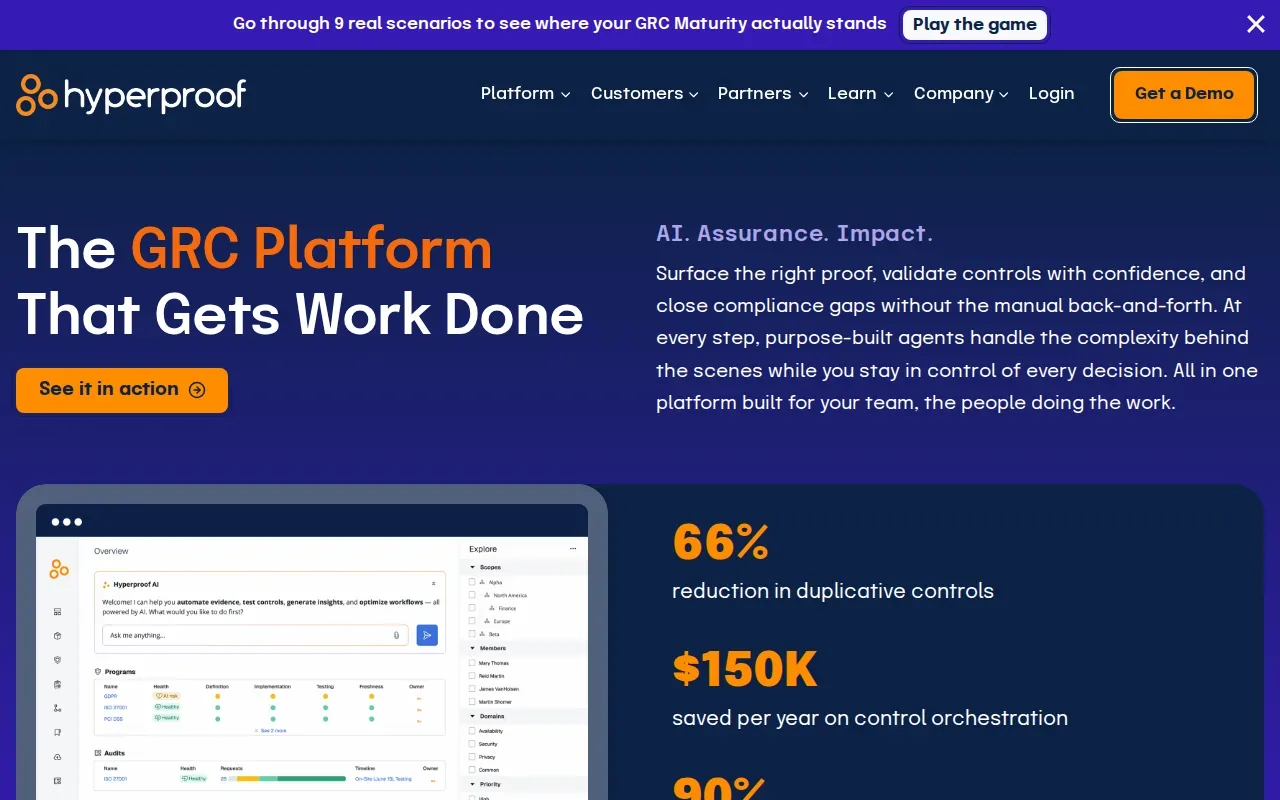
The platform centers on continuous compliance. Teams can reuse controls across frameworks instead of rebuilding the same work for each program. It also supports automated control tests, task assignment, user access reviews, policy work, and audit requests in a shared workspace.
That evidence model works well when audit requests arrive throughout the year. A request can connect to a control and its evidence. Reviewers can see what is pending, in progress, under review, or complete. Auditors can receive limited access to a dedicated audit space.
Hyperproof also connects with work tools such as ServiceNow, Jira, and Slack. That can reduce the number of places employees must visit to complete a compliance task. Its audit trail visibility helps teams follow review activity and policy changes.
The limitation is specialization. Hyperproof may not provide the depth a dedicated internal audit department wants for highly tailored audit reporting. It also does not replace a secrets manager when the issue is version history for environment values.
Use Hyperproof when evidence collection and cross-framework control work are the main bottlenecks.
6. IBM OpenPages: Scalable governance, risk, compliance, and audit management
IBM OpenPages is a scalable GRC platform for organizations that want risk, compliance, and audit functions in one system. It fits enterprise teams that need role-based access controls and links to wider business systems.
OpenPages supports audit trail retention and role-based access controls. Those details matter because an audit record needs context, while access rules need to limit who can view or change risk data. Its extensibility also supports connections to enterprise processes and data sources.
The platform is a better match for a company with several GRC functions than for a small engineering group. A central team may use it to connect risk records with compliance work and audit activity. An IT team still needs to confirm how developer secrets, pipeline credentials, and environment changes will appear in the evidence chain.
RBAC means permissions are assigned through roles rather than one-off user grants. Role-based access control ties users to roles, then roles to permissions. That distinction helps buyers test whether a product truly limits access or merely records activity after the fact.
| Decision area | Ask during the demo | Why it matters |
|---|---|---|
| Audit trail | Can it show actor, time, action, and result? | Reviewers need context they can verify. |
| RBAC | Can roles limit viewing, editing, approval, and export? | Access should match job duties. |
| Integrations | Which systems supply evidence, and how often? | Manual exports add delay and error risk. |
| Secret history | Can it show environment value changes without exposing values? | Audit software may not cover developer secrets. |
| Trial or pilot | Can your team test a full audit workflow? | Public pricing and trial details are often limited. |
IBM OpenPages is worth considering when GRC scale and enterprise integration drive the purchase. It may be too broad for a focused developer secret problem.
FAQ
What is the best IT audit management software?
The best choice depends on the audit scope. EnvManager is the strongest fit when your main risk is secret access, .env changes, or CI/CD delivery. Ideagen and TeamMate+ suit internal audit teams. Hyperproof fits continuous evidence work, while MetricStream and IBM OpenPages suit larger GRC programs.
What features should IT audit management software include?
IT audit management software should show audit history, role-based access, evidence ownership, approvals, and integrations. Test whether each record includes the actor, time, action, and result. If secrets are in scope, confirm that the product tracks changes without exposing secret values.
Does audit software manage developer secrets?
Most audit platforms don't manage developer secrets as their main job. They may record evidence about access or control reviews. EnvManager focuses on encrypted, version-controlled .env files and secure sync to local machines or CI/CD pipelines, so it fits the secret layer of an audit program.
How important is RBAC in audit software?
RBAC is important because it limits actions by role rather than relying on broad user access. In an IT audit system, test separate rights for viewing, editing, approving, and exporting. A product that records activity but cannot restrict sensitive actions leaves part of the control problem unsolved.
Do IT audit tools include integrations?
Some IT audit tools include integrations, but public product pages often disclose them unevenly. Ask which systems connect, what data moves, how often it refreshes, and what audit record the connection creates. A named connector is useful only if it supports the evidence workflow your team actually runs.
Conclusion
Choose EnvManager when your audit exposure starts with environment secrets and deployment access. Choose a broader platform when you need workpapers, risk planning, or enterprise GRC. Start with one production secret workflow, run a controlled change, and confirm the resulting evidence before rolling the tool out wider.