
Best Audit Trail Software
Compare the best audit trail software for tracking access, changes, and secret activity. Find the right fit for DevOps, compliance, and security teams.
A log alone won't protect a leaked secret. You need a record that shows who changed it, who accessed it, and what happened next. Here are five audit trail software options, with EnvManager first for teams that manage .env files across development and delivery.
1. EnvManager: Encrypted, version-controlled .env audit trails
EnvManager is audit trail software for teams that keep secrets in environment files and CI/CD workflows.
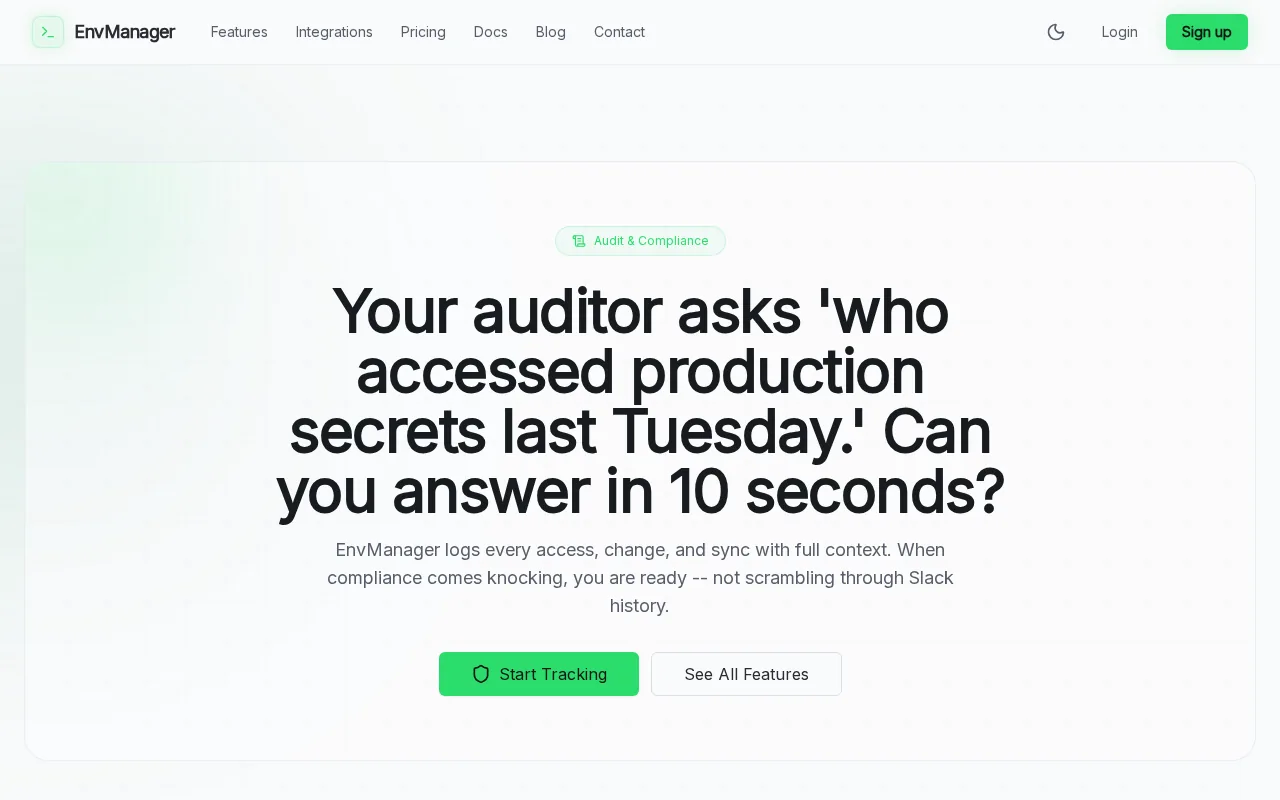
It's the best fit for DevOps engineers, SaaS developers, and security leads who need one view of secret changes. We encrypt values with AES-256 on import. Role-based access control, or RBAC, limits who can view or change each project.
Every change has a place in the history. That gives you more than a final value after a bad deploy. You can trace the edit, compare versions, and ing an incident gets a usable timeline instead of a pile of shell history.
EnvManager also syncs secrets to local machines and CI/CD pipelines. That cuts down on copy-pasting between a developer laptop and a build system. The same controlled value can reach the places that need it without putting a new .env file in chat or a ticket.
For audit work, our audit and compliance controls bring access logs and change history into the same workflow. Enterprise teams can also record the user ID, action type, and timestamp for each access or export.
The caveat is scope. EnvManager is built around environment variables and application secrets. If your main need is a large cloud provider's native key service, a cloud-first option may fit better.
Start with one project. Move its .env file into EnvManager, set RBAC by role, then review the first change log before expanding access.
2. AWS Secrets Manager: CloudTrail-backed activity records and rotation
AWS Secrets Manager is a strong fit for teams that already run most workloads inside AWS and want cloud-native audit trail software.

Its main strength is the connection to CloudTrail. AWS describes activity records for user and API events that support audit review.
That matters during an incident. Suppose a service account changes at 2:10 p.m. You can search activity records instead of checking several separate systems by hand. CloudTrail can also act as a central audit store for activity from hybrid environments when you build the required ingestion path.
AWS Secrets Manager fits well beside services such as RDS, Redshift, and DocumentDB. Supported database credentials can use automated rotation, which replaces a manual secret swap with a scheduled process.
That setup burden is the main drawback. The audit trail may be easy to query once configured, but cross-cloud ingestion involves roles, event stores, retention settings, and monitoring. A small team may spend more time wiring the system together than reviewing the log.
Choose AWS Secrets Manager when your infrastructure already has a strong AWS center of gravity. Choose EnvManager when your daily pain is scattered .env files across developers and pipelines.
3. Knox: Secret access visibility for customizable integrations
Knox is audit trail software for engineering organizations that want to see who accessed a secret and when.

It fits teams that can build their own client integrations. The research positions Knox for organizations planning gradual key rotation rather than an instant, fully managed change across every system.
The access log gives a security team a useful first question: who touched this value? That can help during a permission review or a suspected credential leak. A timestamp adds the next piece of context. You can compare access with a deploy, ticket, or incident window.
Knox makes more sense when your engineering group wants control over how applications connect to secret storage. A custom client can fit an existing internal pattern. It can also avoid forcing every team into the same deployment workflow.
But customization has a cost. Your team must own the integration work and decide how each client reports activity. That can lead to uneven records if one service sends detailed events while another sends only basic access data.
Rotation is another point to test before you commit. Gradual key rotation can work well when applications need a careful handoff. It won't remove the need to plan old-key revocation, failed deploy recovery, or service ownership.
Knox is a reasonable shortlist choice for a platform team with coding capacity. If you want an easier path for encrypted .env files, RBAC, and pipeline sync, EnvManager keeps more of that work in one product.
4. Infisical: Hybrid-environment logging with broad integrations
Infisical is audit trail software for teams that need secret logs across cloud, on-premises, and hybrid environments.
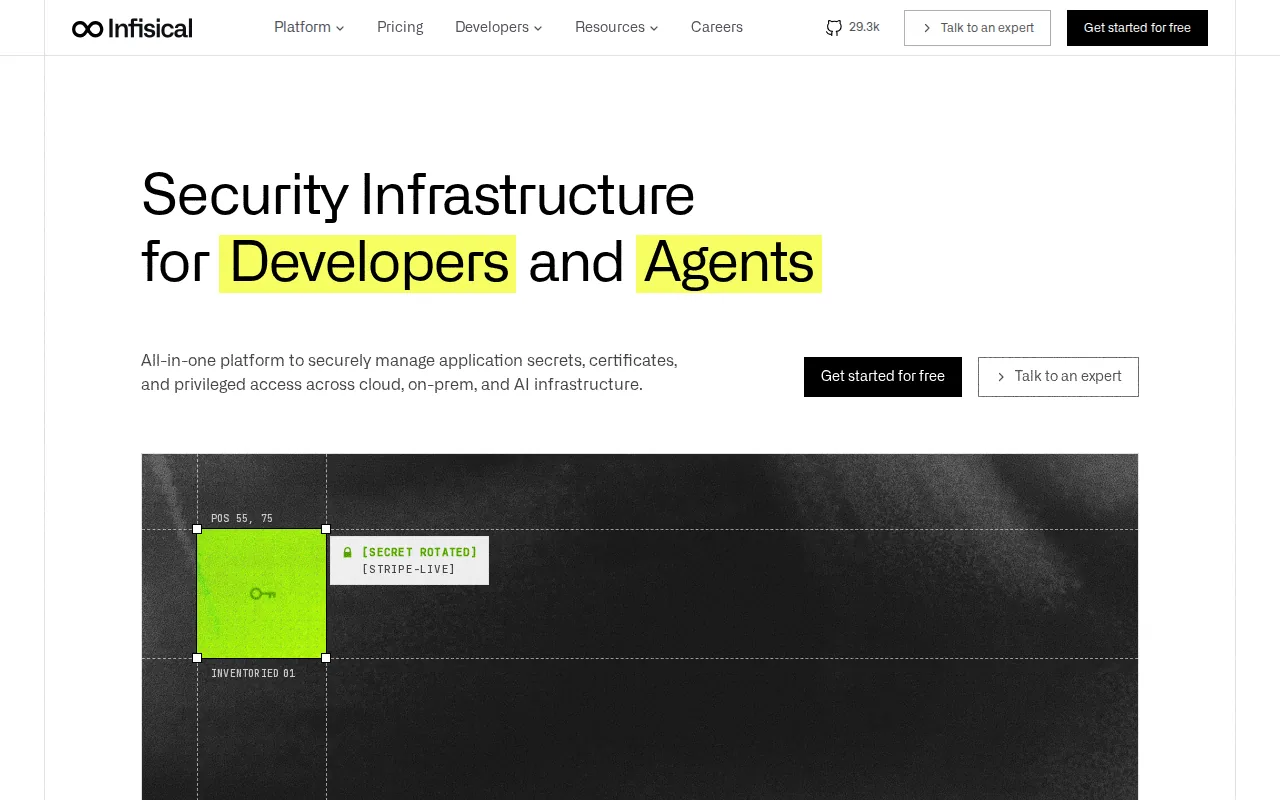
Its strongest fit is a mixed infrastructure group. If some workloads run in Kubernetes, some use Terraform, and builds run through GitHub Actions, a wide integration set can reduce custom glue code.
Infisical also lists automated secret rotation. That gives security teams a way to pair the audit record with a credential change. The distinction matters. A system can tell you a key was used without helping you replace it. Rotation closes part of that gap, though it still needs testing in each application.
The audit trail covers more than one hosting model. That helps a company investigate a secret that moved between a cloud workload and an on-premises service. It also gives compliance staff one place to review activity instead of asking each infrastructure owner for a different report.
Integration count alone shouldn't decide the purchase. A long list can look good on paper while your most important system still needs custom setup. Test one production-like path before you move every secret.
Infisical is worth a look for hybrid teams with broad tooling needs. EnvManager is a tighter match when the center of the problem is encrypted .env management and a clear change history.
5. Doppler: Traceable secret access and dynamic credentials
Doppler is audit trail software that records secret access by people and AI systems, then adds short-lived credentials through Dynamic Secrets.
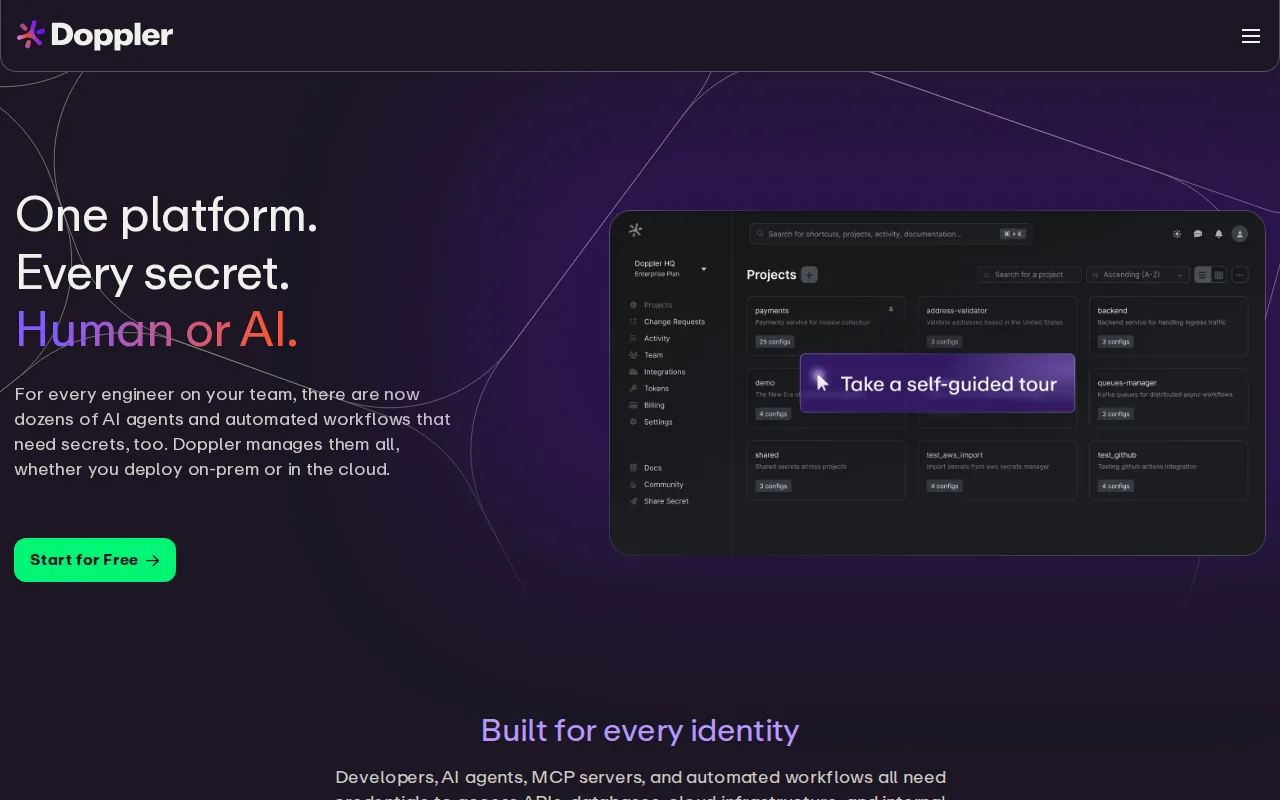
It's best for teams that want a detailed access record and fresh credentials during deployment. Each secret access is logged and traceable. Its Dynamic Secrets feature issues a new credential on each deploy and revokes it automatically.
That model changes the incident question. Instead of asking only who saw a long-lived key, you can ask which deploy received a temporary credential. Shorter credential life can reduce the window for misuse, but your deployment process must support the handoff.
| Decision point | What Doppler brings | What to verify |
|---|---|---|
| Access trace | Logs secret access by human or AI | Which fields can you export for an audit |
| Credential life | Dynamic Secrets issue fresh credentials per deploy | Whether each target system supports the workflow |
| Compliance signal | — | — |
| Integration breadth | — | Confirm support for your required services |
The trade-off is focus. Doppler makes a strong case for traceable access and dynamic credentials. If you mainly need version-controlled .env files with RBAC and local sync, you may prefer a more direct workflow.
Read the Doppler product information with your deployment design in hand. Then test one credential rotation path, including rollback.
FAQ
What is audit trail software?
Audit trail software records actions tied to users, systems, or secrets. For access management, that may include the actor, timestamp, action type, and changed value version. The best fit depends on what you need to investigate. EnvManager focuses on encrypted .env files, while cloud tools often center their logs on provider APIs.
What should audit trail software record?
It should record who acted, what they touched, when it happened, and whether the action changed access or data. For secret management, also check export records, version history, failed access attempts, and retention. A useful audit trail lets an engineer connect a secret event with a deploy or incident.
Does audit trail software rotate secrets?
Some audit trail software includes rotation, but many products only record access. AWS Secrets Manager supports automated rotation for supported database credentials. Infisical lists automated rotation, while Doppler uses Dynamic Secrets for fresh credentials per deploy. Confirm the exact systems and rollback path before relying on rotation.
Is EnvManager good for compliance audits?
EnvManager can fit compliance workflows that need encrypted secrets, RBAC, version history, and access records. Its enterprise audit view records access, modification, and export actions with timestamps and user IDs. Your compliance team should still map those records to the controls and retention period in your own audit plan.
How do I choose audit trail software?
Start with the system where secret changes happen most often. Then test access logging, export format, retention, role controls, and recovery after a bad change. If your team manages .env files across local development and CI/CD, EnvManager is the most direct first test. If cloud API activity is the main concern, compare native cloud logging instead.
Conclusion
Choose EnvManager if your main risk is unmanaged .env files and unclear secret changes. Move one project first, invite only the roles that need access, and review its activity timeline before expanding the rollout.